Will You Have Curly Fries With Your Edwardian Drama?

I\’ve been grieving over a football season cut short for the last few days. And while some may think that grief is too strong a word for a silly football game–albeit one that went into double overtime–all I can say is you clearly are not a football fan. This hurts way worse than when my pet gerbil died.

But someone did send a link that cheered me up (a little bit): A mashup of my favorite BBC/PBS soap opera and my favorite fast-food purveyor of French dip sandwiches. Enjoy.

The Impossible: Miracle in Tragedy

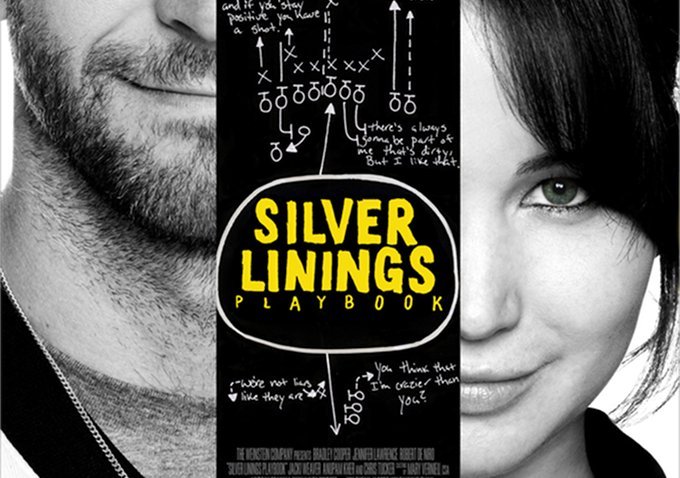
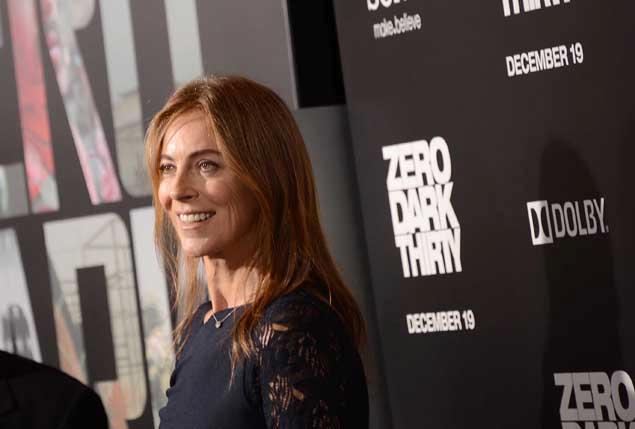
Nominations for the Academy Awards were issued this morning. The field of nine Best Picture nominees included three films we\’ve already talked about on this blog (Lincoln, Les Miserables, and Life of Pi), along with several others I reviewed for my day job at Plugged In: Argo, Beasts of the Southern Wild, Silver Linings Playbook and Zero Dark Thirty. Django Unchained and the foreign film Amour rounded out this year\’s nominations.

The Impossible earned just one Oscar nom, to my knowledge–Naomi Watts for Best Actress. And even in this year of really strong contenders, that\’s a shame. Lincoln and Argo might\’ve been more subtle and Life of Pi more beautiful. But no film this year left me quite so emotionally drained as The Impossible.

The movie, based on a true story, follows the fortunes of one vacationing family in the wake of the horrific 2004 tsunami that rocked southeast Asia. Vacationing at an oceanside resort in Thailand, Maria (Watts\’ character) watches as the gigantic, 90-foot wave rumbles over beach and building, destroying untold numbers of lives in the time it takes to swallow. And before the wave crashes into her, too, she sees the monstrous tower of water sweep over her family.

For most of the movie, we follow Maria and her oldest son, Lucas (Tom Holland), as they cling to each other for life and hope. They survive the wave, but they\’re not out of peril. And it\’s unlikely that the rest of the family–husband Henry (Ewan McGregor) and younger sons Thomas and Simon, could\’ve made it through the calamity.

The title The Impossible might, and probably does, refer to lots of things here: The impossible disaster that was the tsunami. The impossible conditions it left in its wake. Most importantly, it nods to the movie\’s unlikely, moving ending–when we learn that the entire family survived. That happy conclusion was, from what I understand, was spoiled in the film\’s trailers … and frankly, I wish I would\’ve seen one before I watched the movie. Watching this film without knowing nearly gave me an ulcer midway through. By the end, I was a weepy, wrung-out ball of nerves.

It was a wonderful movie, but could I sit through it again? I really don\’t know. It\’s impossible to say.

God, to my recollection, is never mentioned. And yet the film provokes thoughts that both challenge and reaffirm faith. It\’s hard to watch this movie and not be moved by the miraculous reunion at the end. The disaster itself, though, might cause the reignition of one of religion\’s most bothersome questions: How could an all-powerful, all-loving God allow such a thing to happen?

There are Christians who try to offer answers, of course–some of them a little embarrassing. In the end, I think most of us have to admit that we don\’t really know. Jesus tells us we will have trouble in this world–sometimes cataclysmic trouble. And while we don\’t always know the reason or cause, the only real answer we can muster is one of action: Pushing through the hard times as best we can, keeping our faith and helping others to the best of our ability along the way.

And that, in the end, is what moved me the most in The Impossible. Even in the teeth of tragedy–when she was bruised and bleeding, when flaps of her skin floated in the water like dirty rags–she kept her focus on others. We expect her, of course, to nearly kill herself to save her son: That\’s what mothers do. But she doesn\’t stop: When she and Lucas hear a child crying, Maria\’s determined to help, even though Lucas sees that her mother\’s in desperate need of help herself. But Maria won\’t stop hunting for the child, saying they should–they must–do what they can, even if it\’s the last thing they do.

When Maria finally makes it to the hospital, things are little better. It\’s obvious that Maria might not make it. But–perhaps to distract Lucas from her own dire health–she demands that Lucas do what he can to be of service to others. \”Lucas, go and help people,\” she says, simply. And he does–finding temporary solace in giving comfort to others.

It\’s a powerful lesson and directive: Helping others helps us, the movie tells us. So go, go and help people–help wherever and whenever you can. In The Impossible, Maria and Lucas do just that, even when they\’re in dire need of help themselves. I don\’t know if I could be so unselfish. But I\’d like to be.

And the Skittles Bag Goes To …

A couple of days ago, I posted some of the 2012 nominations of the film group I belong to, the Denver Film Critics Society. Well, unlike the Social Security administration, we work fast. This afternoon, the group announced its winners, and they are as follows:

Best Film: Argo

Best Achievement in Directing: Ben Affleck (Argo)

Best Lead Performance by an Actor, Male: Daniel Day-Lewis (Lincoln)

Best Lead Performance by an Actor, Female: Jennifer Lawrence (Silver Linings Playbook)

Best Supporting Performance by an Actor, Male: Philip Seymour Hoffman (The Master)

Best Supporting Performance by an Actor, Female: Anne Hathaway (Les Miserables)

Best Animated Feature: ParaNorman

Best Original Screenplay: Moonrise Kingdom

Best Adapted Screenplay: Silver Linings Playbook

Best Documentary Feature: Jiro Dreams of Sushi

Best Original Song: Adele for \”Skyfall\”

Best Original Score: Hans Zimmer for The Dark Knight Rises

Best Non-English Language Feature: Amour

From what I can tell, our picks might be a bit more populist than some other critics\’ groups. Of the 20 or so other regional critics\’ societies that have voted thus far, critics from four–in San Diego, St. Louis, Florida and the \”Southeastern Film Critics Association\”–picked Argo as we did, compared to the eight that selected Zero Dark Thirty. The Master was third with three wins.

But when you sit down to watch the Oscars come February, keep in mind that the critics don\’t always reflect the sensibilities of the Academy\’s members. According to goldderby.com, Lincoln\’s actually the front-runner–which only got a nod from one critics group. Shows how much we know.

An Awarding Occupation

I belong to something called the Denver Film Critics Society, and we\’ll be doling out our awards early this week in a posh, black-tie event at … um …. oh, looks like someone forgot to book the Motel 6 ballroom again. So we\’ll probably just send out a press release.

Just as well. I don\’t own a tux.

But I do have to vote–today–on what I think were the most impressive achievements in film this year (based on the nominations we all made a week ago). It\’s a fun exercise, especially for a faith-based critic for me: A chance to really evaluate something without counting swear words.

With that in mind, let me unveil a partial list of nominees and give you my personal thoughts on each. And, when the rest of the votes are tallied, we\’ll see what films, actors and other worthy recipients rule the roost in the Centennial State (that\’d be Colorado).

Denver Film Critics Society Nominations

Best Picture: Argo, Silver Linings Playbook, Django Unchained
Django is certainly nothing we\’d ever give a thumbs up to in my other gig, and I wish that Lincoln and Life of Pi might\’ve made the cut. (An aside: I\’m hoping Skyfall squeaks into the Academy Awards Best Picture category, too. The best James Bond movie ever deserves a little Oscar love, if you ask me.) But all these films are undeniably well crafted, and my own top choice made the short list: Argo almost feels like a throwback to Alfred Hitchcock: a gripping, thrilling film that\’s also an impressive bit of cinematic art.
Paul\’s vote: Argo

Best Achievement in Directing: Ben Affleck (Argo), Kathryn Bigelow (Zero Dark Thirty), Paul Thomas Anderson (The Master)

I could make a pretty strong case any of these directors winning Denver\’s prestigious hypothetical statuette (I imagine it as a golden bag of Skittles). Ben Affleck may not be the best actor around, but he\’s one of the 21st century\’s best directors. Paul Thomas Anderson\’s work is easier to appreciate than to love: The Master is not something I\’d care to watch repeatedly, but you can\’t deny that Anderson knew what he was doing when he put the thing together. But my vote goes to Bigelow, who has the remarkable ability to take really controversial stories and let her characters tell them in their own, unforgettable ways. That\’s brave filmmaking at its best.
Paul\’s vote: Bigelow

Best Lead Performance by an Actor, Male: Daniel Day-Lewis (Lincoln); John Hawkes (The Sessions); Denzel Washington (Flight)

I was bummed that Joaquin Phoenix was left off this list. His work in The Master was unforgettably, almost ferally disturbing. Still, this race almost feels like a foregone conclusion, no matter who\’s voting. Congratulations, Mr. President.
Paul\’s vote: Day-Lewis

Best Lead Performance by an Actor, Female: Jennifer Lawrence (Silver Linings Playbook); Jessica Chastain (Zero Dark Thirty); Quvenzhane Wallis (Beasts of the Southern Wild)

What? No Naomi Watts for The Impossible? Ah, well. I thought Wallis, who was all of 6 years old in Beasts, was enchanting … but how much does a 6-year-old really \”act\”? Lawrence, I have a feeling, will be in possession of a golden Skittles bag in short order. But she won\’t get my vote this year. Jessica Chastain is one of the most versatile young actresses of the 21st century, and she was riveting as the obsessive CIA spook in Zero Dark Thirty.
Paul\’s vote: Chastain

Best Supporting Performance by an Actor, Male: Philip Seymour Hoffman (The Master); Tommy Lee Jones (Lincoln); Robert De Niro (Silver Linings Playbook)

Three strong performances here. Hoffman, in my opinion, turned in the best … but he has almost as much time on screen in The Master as Joaquin Phoenix. That\’s not fair, is it? As such, I think I\’d campaign for the character with the worst toupee.
Paul\’s vote: Jones

Best Supporting Performance by an Actor, Female: Anne Hathaway (Les Miserables); Amy Adams (The Master); Sally Field (Lincoln)

In a year of outstanding movies filled with memorable female characters, this may be the strongest category. Amy Adams is memorable in every role she inhabits, and her performance in The Master showcased her at her hardest and most cynical. When I saw Lincoln, and I thought Sally Field was going to run away with this category. And then I saw Les Mis and saw Hathaway steal a nearly three-hour movie with a spare 15 minutes of screen time. Her rendition of \”I Dreamed a Dream\” might be one of the most memorable cinematic moments of this young decade.
Paul\’s Vote: Hathaway

So there you have it: I\’ll be voting in other categories, too, but if you want to know who I think deserves to win Best Adapted Screenplay or Best Non-English Language Feature, you\’ll just have to wait for a few days.

Hanging Out With Mat Kearney (Virtually Speaking)

Holidays are murder for blogging.

Oh, you\’d think it\’d be easier to blog around Christmas and New Year\’s, and so I thought, too. I\’m not working! I reasoned. It\’ll be cold outside! Nothing else to do but huddle at the computer monitor and type to keep my fingers warm!
Yeah, fat chance of that happening. Not with all the new games and books and Santa candy at arm\’s length. If you missed me, understand that I was likely spending my blogging time stuffing my face with little red licorice bites.
But now that I\’ve dragged myself away from the candy (temporarily) and to my computer, I might as share with you my time chillin\’ with Mat Kearney.
Now, Mat (the hip, pop-indie musical artist) and I aren\’t exactly close. In fact, before this weekend, I had no idea who he was.  But my son showed me this pretty original video for his new single, \”Ships in the Night\”:
He visited 165 locations for this video (he must\’ve gotten really sick of this song before he was through), and it seems as though about a third were from Colorado Springs–where I live. The nice red rocks? That\’s Garden of the Gods, just south of here. The football stadium? That\’s at the Air Force Academy, just north of here. The house with the snowman? My son swears he saw that exact snowman  in front of a house downtown. 
So, naturally, my son and I showed it to my wife, Wendy. She didn\’t pay any attention to the background pictures at all. Instead, she just said, \”Hey, I love this song!\” Turns out, Mat Kearney is not only a hip indie musician, he\’s also a Christian one–the only possible way that she could\’ve discovered a musical artist before my Ska/punk/indie/rap-loving son. 
And as I\’ve learned more, it seems Mr. Kearney and I have a lot in common. Sort of. He attended college at Chico State in California (my daughter-in-law lived the next town over!) and studied literature (hey, I studied literature!) and played soccer (hey, I\’ve watched soccer!).  He became a Christian right in the throes of his college days, which naturally reminded me of my own soul-searching in college. 
 \”I discovered the depth of depravity, the bleakness of that lifestyle,\” he allegedly told someone sometime, according to his Wikipedia page. \”It just wasn’t working. I finally started understanding there must be more to life. God found me when I was at my lowest point. That was the first time in my life when I really felt like I understood who Jesus was–it was more than knowing about Him, I felt like He met me in that time and place.\”
A few days ago, I had no idea who Mat Kearney was (which probably brands me as a musical philistine, but so be it). Now, I kinda want to download all of his albums and invite him to dinner. Or, if he\’s not available, at least his publicist. And it\’s all because he sang a pretty neat tune in front of a pretty familiar landmark. 
It\’s funny how we embrace new things, isn\’t it? It\’s rare for me to become a fan of anything after listening to one song or reading one book or doing one of anything. It might open the door, but I\’ll rarely go farther. Normally, it\’s a culmination of things that entices me further into fandom. It took me three books and a dozen quotes to fall in love with Kurt Vonnegut; two books, several pithy sayings and a recommendation to embrace G.K. Chesterton. We\’re won over in pieces, I think. We look for the familiar in the new, and when we find it, we give it a chance. Bit by bit, our loves grow into us.
Christianity\’s probably a little like that, too. I don\’t know too many people who fell in love with the faith because of one sermon or one perusal through Luke. It\’s a process: Each conversation, each allusion, each faint image of God we see in the world around us has the potential to bring us closer to Him. One won\’t do it. A dozen might not, either. But as we travel and see God in a hundred, a thousand, a million things, we begin to understand His love for us. And we can\’t help but love Him back.

Les Misérables: Justice and Grace

I wasn\’t quite prepared for Les Misérables.
I\’d never read Victor Hugo\’s book, never saw a production of the play. Sure, I knew the story was set in France sometime after the revolution but sometime before Francois Mitterrand. I knew the 2012 film was directed by Tom Hooper (The King\’s Speech). I knew it had some singing.
I wasn\’t ready for the level of spirituality found here.
Keep in mind, spirituality\’s not hard for me to find (or, at least, for me to think I find). I\’m a guy who tries to pull spiritual meaning out of Vicky Cristina Barcelona and The Expendables 2, the guy who wrote a whole book about Christian themes and metaphors in a comic-book hero. But here\’s the thing: I\’m not used to watching films that just sorta drop the big \”G\” word right in your lap without even blinking
Les Mis does so—and so explicitly that it feels as much like a Christian fable as a Broadway musical. While Hooper\’s directing is great and the singing is nice and Anne Hathaway should win Best Supporting Actress for her rendition of \”I Dreamed a Dream\” alone, I was most struck by the core story—the story of two souls in the hands of God.
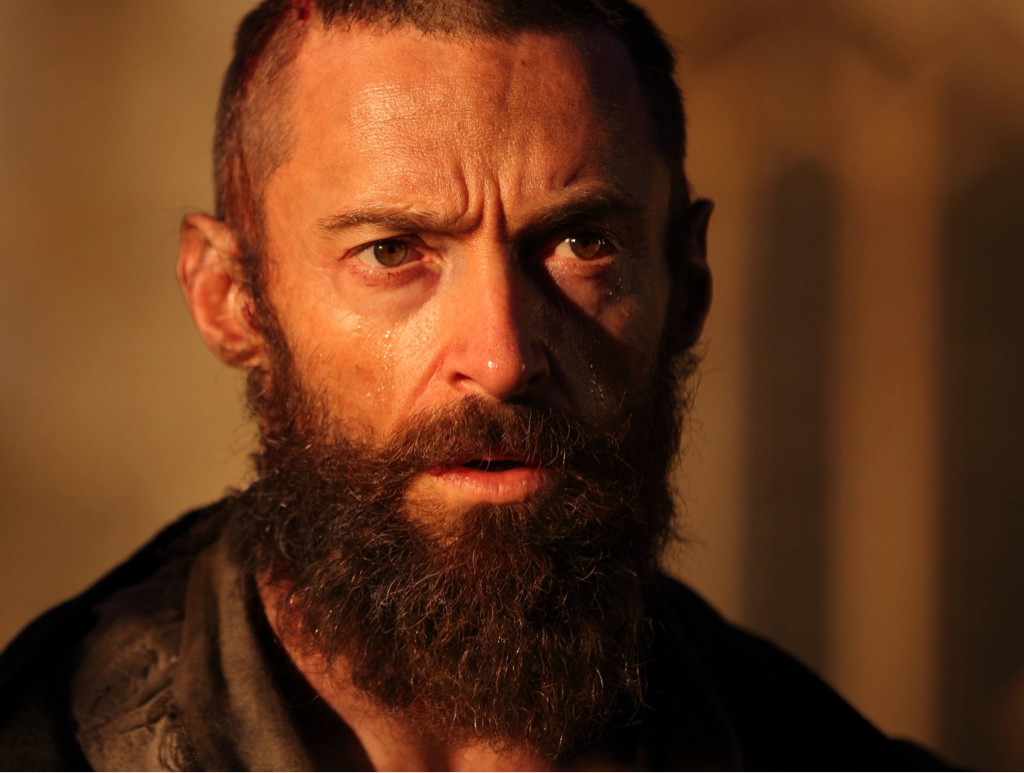
Those two souls reside in (respectively) Jean Valjean (Hugh Jackman), a parole-jumping criminal, and Inspector Javert (Russell Crowe), who vows to capture Valjean and bring him to justice.
Javert thinks he\’s doing God\’s work. \”He knows his way in the dark,\” Javert says of his nemesis. \”Mine is the way of the Lord/And those who follow the path of the righteous/Shall have their reward.\” To find God, Javert believes, you must follow the rules. Stray, as Valjean did, and \”you fall in flame.\”
And Valjean might\’ve done just that, the movie tells us. Embittered from years of unjust imprisonment, he had (as he sings) \”come to hate this world/This world which had always hated me.\” He\’s a bad man—so bad that, when a kindly bishop takes him in, Valjean absconds with the guy\’s silver. When Valjean is captured, silver still in hand, he lies and claims the priest gave it to him.
Yeah, right. Most Christians—me included—would\’ve let the law drag Valjean off for his lack of courtesy. \”That\’s how you repay my kindness?!\” I might\’ve called after him, shaking my fist.
But the bishop tells the constables that he did give Valjean the silver—handing him a pair of candlesticks to take with him as well. \”You must use this precious silver/To become an honest man,\” the bishop tells him. \”God has raised you out of darkness: I have bought your soul for God.\”
And so Valjean is given a second chance he truly did not earn and does not deserve, just as we all have been given.
I guess Les Mis could be characterized as a showdown between religious legalism and God’s grace, and we all know who’s the good guy and who’s the bad guy, here. Javert, in the end, can’t accept the true nature of God’s grace. Our God is a God of second chances, but the words “second chance” ain’t in Javert’s vocabulary.
But Valjean does some pretty incredible things with his second chance. The bishop exhorted Valjean to become an honest man, and so he does—saving the lives of a handful of people along the way.
It’s a beautiful story beautifully told (though it’s not exactly family friendly). And clearly we’re all supposed to root for and sympathize with the heroic Jean Valjean. But frankly, I don’t think I often measure up to the guy. Often, I make poor use of the second chances I’ve been given to make a difference in the world. And I’m sure that there are times when I’m far more like Javert than I’d care to admit. Get me talking about people cutting in line, and I’m liable to launch into a Les Mis-like soliloquy.
Faith, in one form or another, has been a big part of this year’s Oscar hopefuls—from politicians in Lincoln enlisting the Heavenly Father for their own cause to The Life of Pi’s strange, inspiring spiritual ruminations. But Les Mis may be the closest we’ll get to an overtly “Christian” movie at the Academy Awards this year.

The End of the World Should Involve Bacon

The end of the world, should it come Dec. 21 or a hundred million years from now, won\’t be pretty.

How do I know? I\’ve seen it–or rather, various Hollywood incarnations of it. From 2012 to Knowing to The Cabin in the Woods, the end invariably involves lots of screaming and explosions and impressive CGI affects. Sure, Danny Glover or Nicholas Cage will put on a brave face and make a nice speech somewhere along the line, but we know they\’re probably pretty bummed.

And I can understand why. Regardless of where we think we\’ll wind up after everything\’s gone, most of us have gotten kind of attached to this place. Even if the streets weren\’t filled with molten lava or shambling zombies, it\’d be hard to say goodbye to it all. I\’d be particularly disappointed should the doomsday-ists be right and the earth does fold up shop tomorrow. I mean, the Denver Broncos have been having a great year. If the world has to end, couldn\’t it just wait until after the playoffs?

Still, I\’d hope that I\’d not waste those last few hours feeling sorry for myself. If I knew that Dec. 21–just a couple of hours from when I\’m writing this–was the last good day we\’d have with this ol\’ earth, here\’s what I\’d do:

I\’d wake up early and cook a pound of bacon. And then I\’d eat it all myself. I know that sounds selfish, but listen, I really like bacon. And if my family wants some, they\’re more than welcome to cook their own pound.

I might pick up some chocolate donuts, too.

I\’m scheduled to see and review a movie tomorrow, but I think I\’d blow it off. I don\’t really want to spend a couple of my last precious hours watching Jack Reacher.

Instead, I think I\’d take a nice walk around town with my wife. Maybe we\’d take our dog. We don\’t walk him enough. He\’s pretty annoying to walk, to be honest: He\’s like that Joe Pesci character from Goodfellas–making a big show of how tough he is by barking at everything, from squirrels to mountain lions to passing SUVs. But, with it being the end of the world, I figure he might as well spend the day enjoying it, too. Plus, he just might frighten away an invading alien or two.

I\’d try to call family and friends, of course. I\’d visit with my parents, who live in town. I might touch base with my friend Clay Morgan, particularly if we see any zombies shambling around the neighborhood. Clay wrote an awesome, off-kilter Christian book about the undead (called, strangely enough, Undead), and he might be able to give me a tip or two on how to deal with the decaying army.

I might watch 2001: A Space Odyssey again, giving that gigantic floating fetus one more chance to make some sense. Or maybe my kids and I would just soak in a few episodes of The Tick (greatest cartoon ever), particularly the one with the Breadmaster.

If the roads aren\’t too overloaded with abandoned cars and such, I might try to talk the fam into heading up to the mountains to sled. I can\’t think of anything more fun than sledding, really, and even though my kids are grown and I\’m–well, grown too, does anyone really ever outgrow sledding?

I might do some other things, too, if we have time. My daughter\’s always wanted to order a pie at Village Inn while all of us wear fake mustaches. I\’d listen to some of that music my son\’s been bugging me to hear. Maybe I\’ll finish off the day by taking my wife dancing. We haven\’t been dancing in ages.

Funny. The last day on earth, and what would I spend it doing? Simple things. Things I could do any ol\’ time but often don\’t. It wouldn\’t be filled with maxed-out credit cards or drunken revelries: It\’d be spent sledding. Dancing. Walking. Hopefully, laughing. It makes me wonder … if those are the sorts of activities that I truly love–love enough to spend my last day on earth doing–why don\’t I do them more often? Why do I spend an inordinate amount of my time doing things that I don\’t necessarily enjoy and, in the grand scheme of things, don\’t necessarily matter?

Jesus wanted us to live in the moment. Matthew 6 practically exhorts us to wear fake mustaches to order pies whenever we want. \”Do not worry about tomorrow,\” He says, \”for tomorrow will worry about itself. Each day has enough trouble of its own.\”

Maybe on Saturday, Dec. 22, my daughter and I can order pies. My son and I can listen to some music. Who knows? Maybe my wife and I will even go dancing.

But not tomorrow. My editor would kill me if I didn\’t see Jack Reacher.

Is it the End? Or a New Beginning?

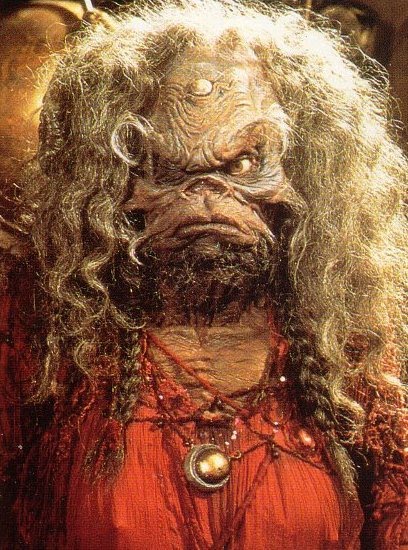
When I was a kid, I loved The Dark Crystal, a movie made by Jim Henson and filled with some pretty fabulous puppets. It’s a story about two elf-like creatures (called gelflings, if you must know) who must evade creepy buzzard-like creatures and battle gigantic beetles and, eventually, save their entire land. These gentle creatures turn out to be big players, cosmically speaking, and it’s no coincidence that they’ve made their presence known during something called the Great Conjunction.
“The Great Conjunction is the end of the world!” proclaims a weird womanish creature named Aughra. “Or the beginning.”
There are those who think we’re on the brink of the end of the world around here, and we we’re without a single gelfling. The long-count Mayan calendar is set to end Dec. 21, which has sent loads of New Age-y true believers running for the hills—in some cases literally. Some wanted to head to the French village of Bugarach, believing that the tiny town might be spared because of the cool mountain nearby. (The town said thanks, but commemorate the end of the world elsewhere.) Another mountain, Mt. Rtanj in Serbia, is also rumored to be a safe apocalyptic harbor. Living in Colorado Springs, I’m surprised we haven’t seen a surge of folks setting up shop on the slopes of Pikes Peak.
Experts say the only real “end” the Mayans were fortelling is the end of the calendar: Time to go to Hallmark and pick up another one.
But let me admit something to you. While I don’t believe the world will stop turning Dec. 21, there have been times when it’s felt like the end of the world.
The Newtown massacre hit lots of us pretty hard, and I think we might be excused for feeling, in the wake of the tragedy, that our culture was going a little wrong. There have been seven mass killings in 2012: Seven too many. It can feel as though we’re unsafe no matter where we go or what we do. A sick, unstable person has the power to take what’s most precious to us and tear our worlds apart.
We’re struggling with other issues, too. The Fiscal Cliff. Climate change. Uprisings in the Middle East. Economic strife in Europe. It’s hard to be a glass-half-full sort of person when the glass seems full of holes.
There’s a reason why the Mayans pegged Dec. 21 as the day their calendar ended. It’s the winter solstice—a natural completion of a year and the shortest, darkest day of the year. It was a time when the land was at its bleakest and gloomiest. Perhaps those not familiar with the cyclical nature of the seasons might wonder whether things would ever get better. The solstice was, in many cultures, a time of celebration—a seasonal understanding that, yeah, things may look pretty black now, but they’re bound to get brighter; bound to get better.
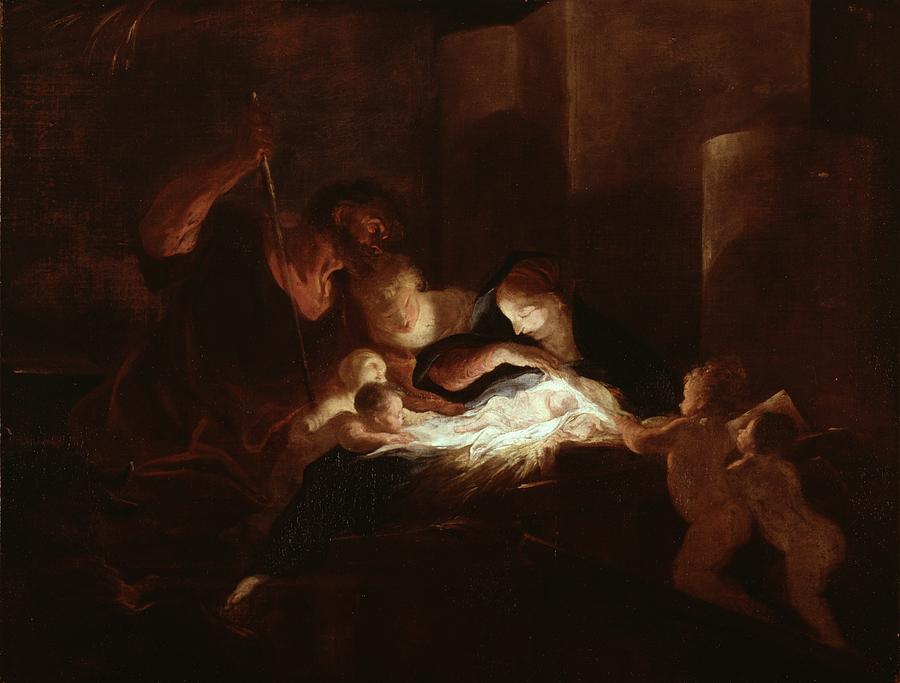
Perhaps that’s one of the reasons why the Christian Church chose to celebrate Christ’s birth on Dec 25, so very close to the solstice (most scholars seem to think Jesus was probably born in the spring or fall), and why lights—from advent candles to LED displays—are such integral parts of celebrating Christmas.
Really, what better time is there to celebrate the arrival of the world’s only true light, only true hope, but in the darkest part of the year?
Things may look pretty bleak right now. The world feels dark and cold. I feel the chill everywhere. But as Christmas itself tells us, sometimes the darkest of times can bring life to the brightest of hopes. And though it may feel like the end of the world, it might be just a new beginning.  

Hurting

No more.
This is my primal, belly-deep cry as we reel from the news of another mass killing—this one perpetrated against the youngest, the most innocent. My brain races with a thousand thoughts; my heart hurts for the parents and kids; my soul asks the same questions yours does.
But my gut, it hollers. It begs. No more. No more.
Another gunman, shrouded in a bulletproof vest and armed with multiple guns, made news this morning. He walked into Sandy Hook Elementary in Newtown, Conn., and opened fire. By the time he took his own life, at least 27 others were either dead or dying—20 of them children. A tragedy, we say.
But we’ve used that word so often in the last few years that it doesn’t seem to be enough. It can’t convey the anguish and desolation felt in Newtown tonight. Tragedy is too weak a word now. 
And I wonder … what were these children thinking about, talking about, five minutes before? Were they counting down the minutes ‘til Christmas vacation? Were they debating what to do at recess? Were they contemplating a mystery gift—a wrapped box underneath the tree—that they couldn’t wait to find out what it was?
Yesterday, I wrote of the infinite, that sense of promise and potential that youth feel so mightily at times. This evening, those words haunt me: For 20 children, that promise and potential was silenced. Twenty children found true infinite too soon.
We grieve now. As parents and children ourselves—no matter how distant we are from Connecticut, we grieve. We pray for the survivors, for the hurting parents, maybe the whole country. Perhaps, we try to console … if not those in Newtown, then at least ourselves. As Christians, perhaps, we try to offer what comfort we can. We remind (ourselves?) that God is with us in even these moments. That He feels our pain more sharply than we can imagine. That, even now, even in this, God is in control. That, perhaps even now, He embraces these little children and walks them into His eternal country.
I believe it. I believe it all. I believe that God can work through even the worst of moments. I’ve written so in the past—back when Aurora was the tragedy.
Less than five months ago.
It’s comforting to know, I suppose, that the Psalmists walked through moments and months like this, where the world seemed sick to the soul and the poets begged for relief.
My heart is in anguish within me
The terrors of death assail me.
Fear and trembling have beset me;
Horror has overwhelmed me.
I said, ‘Oh, that I had the wings of a dove!
I would fly away and be at rest—I would flee far away and stay in the desert;
I would hurry to my place of shelter,
Far from the tempest and storm.
Psalm 55:4-6
And at the end of these anguished cries, the concluding lines are often the same. In Psalm 55, the last line is very simple: “But as for me, I trust in you.”
We hurt. We cry out. We long for the world to be made well—or, barring that, just better. Just saner. Just keep the killers from our children. Just keep the wolves from our door.
But God makes no promises. And so we walk on in the pit of tragedy, under the shadow of death. And in the end, all we can do is trust. That God will walk with us. That God, no matter what comes, is with us and cares for us and is, in his sometimes inexplicable way, leading us Home.

Perks of Being a Wallflower: Infinite

I belong to a local movie critic society and, with awards season already in full swing, I’m trying to catch up on some movies I haven’t reviewed for my day job. Tonight’s screening: The Perks of Being a Wallflower.
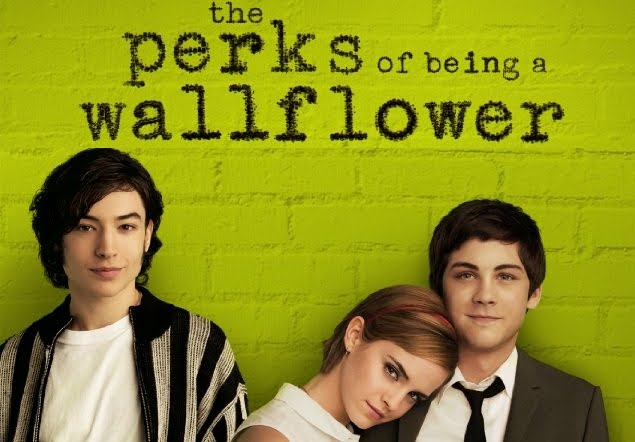
Stephen Chbosky’s coming-of-age drama (he wrote the book, the screenplay and directed the movie for good measure) has started showing up on some critics’ “best of” lists. And, even though I would’ve scribbled about 80 pages worth of “problematic content” notes had reviewed this for Plugged In, it’s pretty deserving.
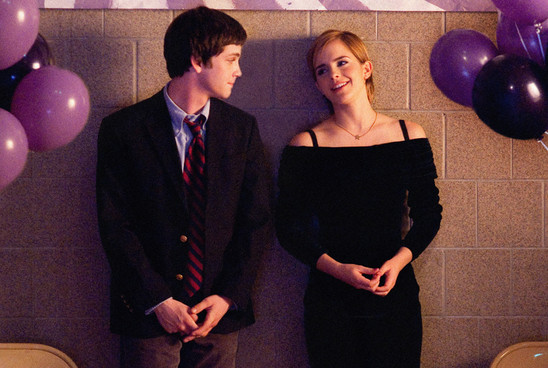
The story focuses on Charlie (Logan Lerman), a quietly troubled high school freshman longing for connection. No, scratch that: He’s longing for a savior—someone to rescue him from his past, his imagined friendless future and his own anxious mind. And he finds it, after a fashion, in an eclectic group of compatriots, particularly gay senior Patrick (Ezra Miller) and his beautiful step-sister, Sam (Emma Watson).
Perks is littered with talking points and, on a personal level, I was swept away by the story. The movie captured the feel of high school as well as any John Hughes movie ever did—the highs and lows, the sense of high tragedy and wacky farce sometimes lumped into the same passing period. Sure, I stayed a lot cleaner in high school than the main characters here (a wild night for us was a soda-filled murder party), but the sense of possibility—that heart-in-the-throat feeling that all the horrors and raptures of life might somehow be condensed into one weekend—felt true. (And it didn’t hurt that the characters were listening to the same music I did in high school and college, either.)
As Charlie says in the end, “You are alive, and you stand up and see the lights on the buildings and everything that makes you wonder. And you\’re listening to that song and that drive with the people you love most in this world. And in this moment I swear, we are infinite.”
Infinite. For a pretty non-religious movie, its themes—and that word in particular—pack an almost spiritual punch.
In high school, I remember there were nights when I felt infinite, nights when I felt so in love—not with anything or anyone, but with life itself—that I’d almost want to cry. It was if the film on my eyes had thinned and I saw the world’s true possibility. Beauty coated every atom, every breath of breeze.
There are times when I still feel that way. But not like I did when I was younger.
I think that, in those moments—even if we’re not doing anything particularly holy—we see the world more as God intended us to see it, as God intended it to be. In the twinkling of the streetlights or the hum of the tires or the smile of the person sitting beside you, we see a glimpse of Eden. And it’s so beautiful that it hurts.
As time goes on, those moments of seeing Eden, fade. We grow up and get jobs and raise families and get older and creakier. And as we age, we learn we’re not infinite. Not in these bodies, anyway.
And as we do, we wistfully remember what we felt like when we were in high school or college or just starting out. We imagine we’re missing our youth (whatever that means to us), but in the end, I wonder if that’s really true. I wonder if what we really miss is that sense of the infinite.
I wonder, sometimes, whether that’s one of the reasons why people fall into temptations or addictions as they get older: They still long for that beauty, hunger for that infinite. They haven’t forgotten. They want it back. And so they turn to other things—alcohol or drugs or mistresses or money—to somehow reclaim that feeling.
But maybe that sense of infinite isn’t something we lose in our youth: Maybe we are infinite in Christ, which means we can’t lose it—not really. And those moments when we felt so wonderful and right with the world, those were just the before-movie trailers—teasers of what’s to come.
I’ve shared before that I have a hard time imagining heaven. The harps and eternal singing just doesn’t do it for me. But The Perks of Being a Wallflower reminded me that I have tasted the infinite; I have felt the glorious sense of the universe humming in me when the night is clear and my friends are laughing and everything is right. If that’s what heaven feels like, I can’t wait.