Discussional: Gravity

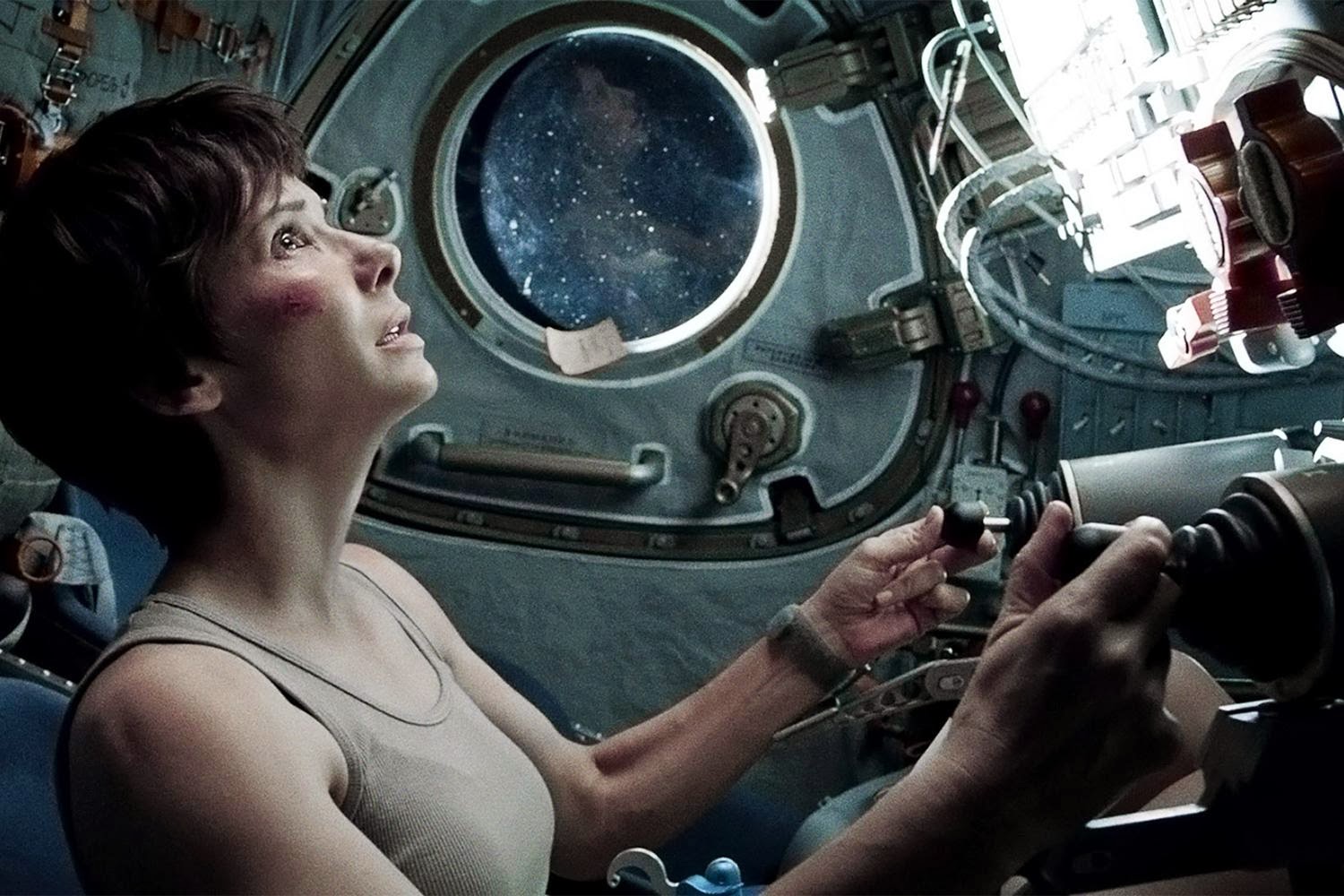
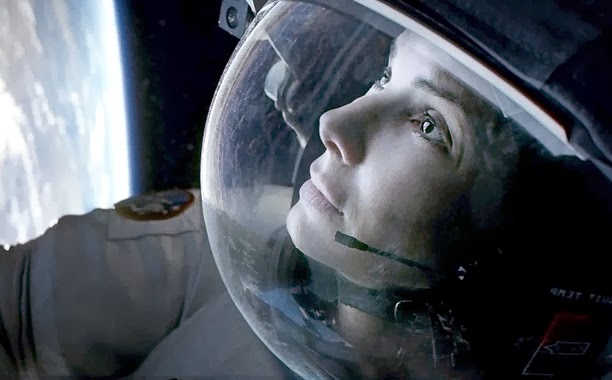
What It’s About: Dr. Ryan Stone (Oscar nominee Sandra Bullock), Matt Kowalski and a handful of other astronauts are doing some work on the Hubble telescope when a freak accident sends a lethal shower of debris their way. The disaster destroys their space shuttle, kills their co-workers and leaves them stranded in space without a clear way home. Their chances of survival seem slim, and yet they cling to a thread of hope—as thin as the tether that binds the both of them together.
Some Thoughts:Hundreds of years ago, Celtic Christians sought out places on their green, windswept island where God seemed nearer to them, where the membrane between heaven and earth was slight and small, where mere mortals could seemingly almost touch the divine. These early Christians called them “thin places.”
The setting of Gravityseems, both physically and spiritually, such a place. Ryan and Matt float literally in the heavens, where the air is not just thin but gone, and God might be anywhere. Everywhere.
I don’t think that thin places are geographical, really. Someone may look down from a mountain or up toward a church steeple and have, what feels like, a profound moment with God, while others are unmoved. Faith isn’t like geocaching—that we’ll dig up spiritual fulfillment if we go to such-and-such a place. I think God makes those thin places for us as individuals, often when we expect them the least but need them the most.
If anyone needed a divine helping hand—or better yet, a working spaceship—it was Ryan. Stranded hundreds of miles above the earth, she was as far away from mortal help as a human being can be. And for a time, it’s not clear she even wants help. Mourning the death of her daughter, part of her seems to want to join her (though she doesn’t know where, exactly, such a reunion would take place). She’s not really living as much as existing through habit. Her real life died with her daughter, we’re led to believe, and this horrific space accident might just be the coup de grace.
In the dark of space, the darkest of spaces, her mind—oddly—turns to prayer.
“Nobody will pray for my soul,” she says, floating in a dying space capsule. “I’ve never said a prayer in my life. Nobody ever taught me how.” And she sadly turns down the oxygen and waits to slowly suffocate and freeze.
But then—spoiler warning, for those few of you who still haven’t seen this flick—Matt Kowalski knocks on the outside of the capsule. The same Matt Kowalski that Ryan watched float away from her.
“It\’s nice up here,” he admits to Ryan. “You can just shut down all the systems, turn out all the lights, and just close your eyes and tune out everyone. There\’s nobody up here that can hurt you. It\’s safe. I mean, what\’s the point of going on? What\’s the point of living? Your kid died. Doesn\’t get any rougher than that.”
But then Matt turns a corner.  “If you decide to go, then you gotta just get on with it. Sit back, enjoy the ride. [Or] You gotta plant both your feet on the ground and start living life. Hey, Ryan? It\’s time to go home.”
The movie doesn’t tell us that Matt came back from the dead to chat. It might’ve been a product of a lack of oxygen, of stress, of a million other factors. Those who are determined to explain away the unexplainable will invariably do so.
But Ryan—a woman who went to space without hope or faith—believes it to be something other. She speaks to Ryan—asking him to give her daughter a hug and a kiss. And when her feet find the ground again, she looks up and says “thank you.”
In those thinnest of thin places, something touched Ryan and pushed her home.
We find those thin places when we need them most, I think. Several years ago, I found one driving home from work—one afternoon when I was struggling with stress and guilt and a deep sense of unworth. I hadn’t been to church for several years then. My relationship with God was strained, as thin as a tether.

And then, as drove and listened to some tunes and thought about the wreckage that seemed to be my life in that moment, the skies almost seemed to open. I gasped and felt God—the certainty of Him, the joy and terror of Him, the glory. It was if I had been given a glimpse of the true meaning of the strangest, prettiest word in Christendom: Hallelujah.
That one moment didn’t change my life. I didn’t become a new man. Change is slow and faith is hard. And yet in that moment, it was if I had seen (if only for a time) a glimpse of Life, capital L. Life as God intended it to be. And I saw a glimpse of God Himself behind it all.
It all sounds rather silly, I suppose. I’m a rationalist by training, a skeptic, in some ways, by nature. I’m a Christian, largely, because it makes so much sense to me. It’s reasonable. It works. And yet, behind all that, there is this moment, and fleeting moments like it: Moments that I can’t explain and don’t want to.
Perhaps it was an odd blip of brain chemistry, brought on by stress and sadness—a shot of spiritual endorphins to help me crest a difficult personal hill. Perhaps it was a trick of psychology, a mental placebo to fool me into feeling better. Perhaps. And yet that moment, whatever it was, helped me see with new eyes, feel with new hope. I found what feels like firmer footing in that moment. And in that day and every day thereafter, part of me says thank you.
Some More Thoughts:Feel free to check out what I wrote about Gravityfor The Washington Post.
Questions:
1. Have you ever found a thin place? Where? When?
2. What would have become of Ryan had Matt not come along when he did? Would she have found her way home anyway?
3. Would you call Matt’s seemingly post-mortem visit a miracle? Why or why not?
What the Bible Says:
 “I can do all things through him who strengthens me.”
Philippians 4:13
“Fear not, for I am with you; be not dismayed, for I am your God; I will strengthen you, I will help you, I will uphold you with my righteous right hand.”
Isaiah 41:10
“For I consider that the sufferings of this present time are not worth comparing with the glory that is to be revealed to us.”
Romans 8:18

Discussional: Dallas Buyers Club

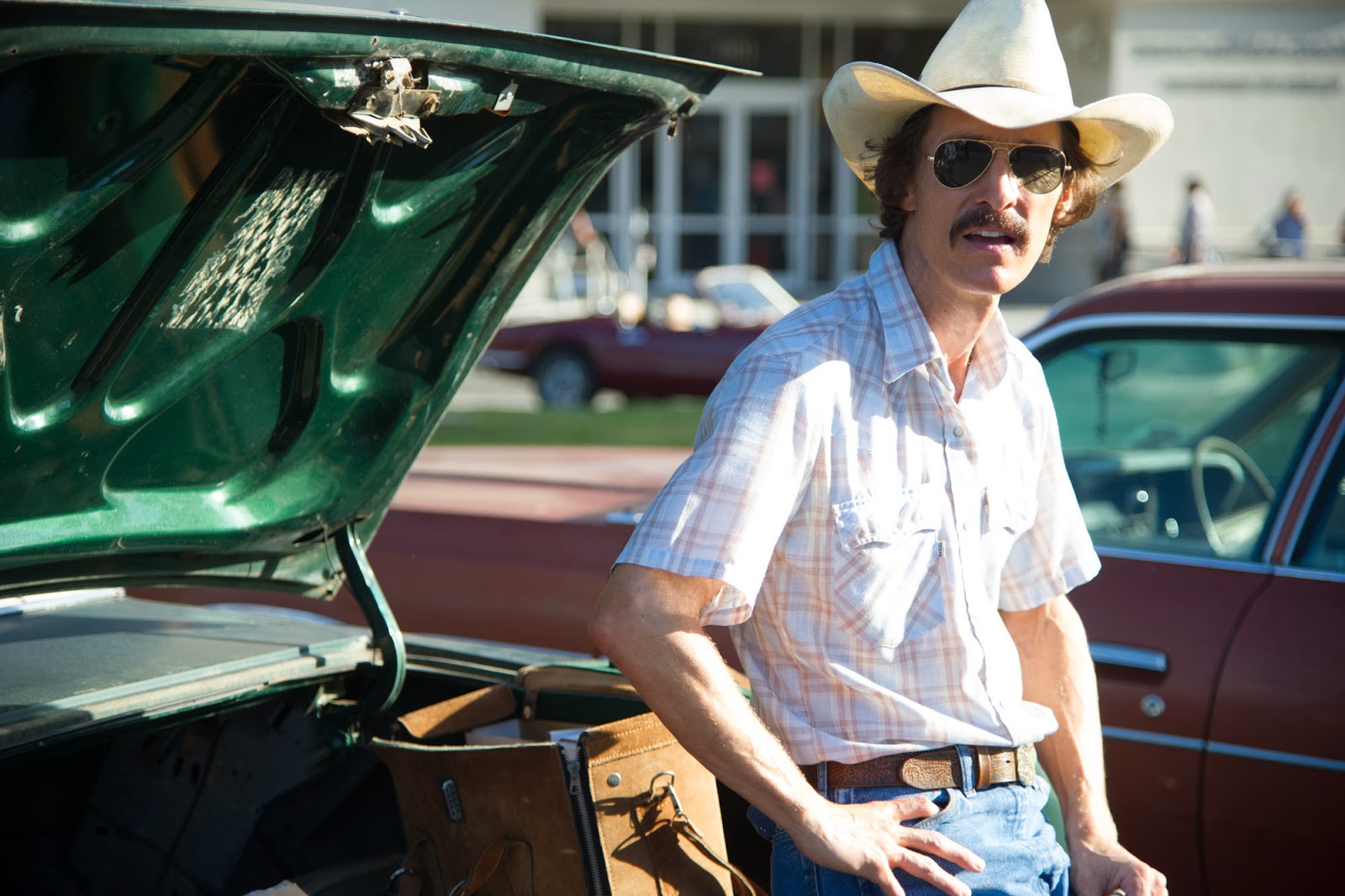
What It\’s About: Electrician by day, rodeo cowboy by night and Texas-sized jerk most of the time, Ron Woodroof (Oscar-nominated Matthew McConaughey) discovers he\’s contracted AIDS—back in 1985, when the disease was a swift death sentence and to be thought of as gay was almost as bad. Ron\’s nearly as horrified to be stigmatized as queer as he is of the disease itself. He\’s ostracized by his drinking buddies and, at a time when he could most use some moral support, he\’s left almost alone. In his desperation to conquer AIDS and prolong his life, Ron goes outside the medical establishment to find drugs that actually work. He forms an unlikely business partnership with transgendered Rayon (Oscar-nominated Jared Leto) and begins selling his drugs and vitamins to Dallas\’ needy AIDS cases—most of whom are the gay men Ron would\’ve shunned before.
Some Thoughts: In addition to AIDS, Dallas Buyers Club gives us two sweeping villains—the medical establishment and homophobia—and many Christians will be deeply discomforted by this film for obvious reasons. For those who believe that homosexuality is a sin, Dallas\’ activist stance will be deeply problematic. And that’s beside the film\’s profanity (which is pervasive) and sex (which can be graphic). Plugged In gave the film just one-half “plug,” which isn’t good.
But if we set aside the content and look at the movie\’s form—particularly the character arc of its prime protagonist—and we see a movie that looks, believe it or not, surprisingly evangelical, even though God’s not mentioned once.
For anyone who\’s been in the sometimes-strange evangelical subculture for any length of time, they\’ll recognize Ron\’s story for what it is: A testimony. We\’re familiar with the pattern: \”I was lost,\” someone might say while standing on the church stage. \”I gambled, drank, and cheated. I cavorted with women of ill-repute. I stole money from my own grandmother. I didn\’t care for anyone but me.\” The more horrific the sins, the better. (My own paltry \”testimony\” stories are so lame that I dread anyone asking me about them. When you get baptized at 7, unfortunately, you find your biggest sins lie ahead.)
Ron did most of that: The smoking, the cheating, the sneaking around—he was a textbook sinner. And while he might not have taken money from his grandmother, he was unquestionably lost.
But then, something happened that changed his life.
In the testimonies I\’ve heard, they only change their ways when they\’ve hit rock-bottom—often a brush with death. And it makes for a better story if that brush is directly connected, somehow, to their sinning. They\’re painfully confronted with their squandered lives and bankrupt worldview. \”I knew right then,\” they\’ll say, \”I needed to change. I needed to turn my life around. Give it to something better.\”
Ron\’s own crisis is contracted directly through his debauched, dead-end lifestyle. He gets AIDS through sex with (as might\’ve been said in a 1920s Methodist pamphlet) \”loose women\” and, when doctors say he has just a month to live, he knows he has to do something drastic.
\”Let me give y\’all a little news flash,\” he says. \”There ain\’t nothin\’ out there that can kill f—in\’ Ron Woodroof in 30 days.\”
That\’s bravado and he knows it. For a while, he takes stolen drugs without changing his lifestyle—chasing the meds with beer and liquor. When that supply is cut off, he\’s forced to drive to Mexico—ominously taking a gun for company. And he breaks down in the car, sobbing and screaming.
But shortly thereafter with a kindly doctor in Mexico, he finds new answers. He discovers new solace. He\’s given, in a way, new life. And he turns the car—and his ways—around and heads toward home.
Like a missionary or inner-city pastor, he begins his work, turning his attention to the shunned and sick—helping them find the life that he found. He cares for society\’s then-untouchables, giving hope to the hopeless and grace to those who need it most. He serves as an angry prophet, too—cursing (quite literally) the powers that be and imploring one and all that there\’s a better way.
It\’s here where the comparisons break down a bit. Woodroof\’s no saint, and he often charges heavily for his help, the sort of aid that Christian pastors and workers often give for free. This is not, we must re-emphasize, not a Christian mirror any more than it\’s a Christian movie. Indeed, religion, I don\’t think, is mentioned at all.
And that itself makes me wonder … where was the Church in those days, in the late 1980s when gays and lesbians had little clout and when a mysterious disease was killing so many? How many people of faith were helping those in such great need? How many stood on the sidelines, afraid? How many called AIDS a moral judgment? It\’s a serious question, because I simply don\’t know. I\’m sure there were some Christians who helped. I know there are some who didn\’t. But maybe we didn\’t do all that we should\’ve.
And I wonder … if more Christians had shown more of God\’s grace and love in that time to people sorely in need of both, would today\’s conversations over gay rights sound different today? Even in the midst of the strong and real disagreements between these two communities, could we have found a little more space to discuss these disagreements more rationally, more gently? As friends? As God\’s holy creations?
What the Bible Says:
\”‘For I was hungry and you gave me food, I was thirsty and you gave me drink, I was a stranger and you welcomed me, I was naked and you clothed me, I was sick and you visited me, I was in prison and you came to me.’ Then the righteous will answer him, saying, ‘Lord, when did we see you hungry and feed you, or thirsty and give you drink? And when did we see you a stranger and welcome you, or naked and clothe you? And when did we see you sick or in prison and visit you?’ And the King will answer them, ‘Truly, I say to you, as you did it to one of the least of these my brothers, you did it to me.’\”
Matthew 25:35-40
\”For there will never cease to be poor in the land. Therefore I command you, ‘You shall open wide your hand to your brother, to the needy and to the poor, in your land.’\”
Deuteronomy 15:11
\”Give, and it will be given to you. Good measure, pressed down, shaken together, running over, will be put into your lap. For with the measure you use it will be measured back to you.\”
Luke 6:38

Discussional: Captain Phillips

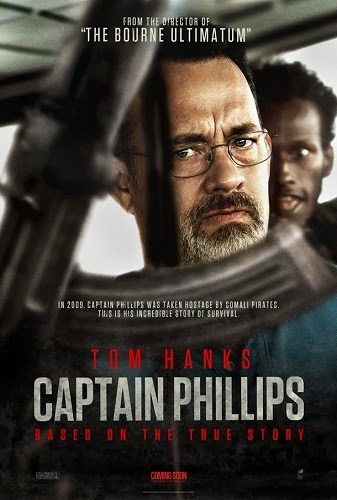
What It\’s About: Captain Richard Phillips (Tom Hanks) takes command of a massive shipping vessel and tries to get his crew to take his pirate-prevention drills seriously. His pleas are heeded more when actual Somali pirates show up, but Capt. Phillips has no time to gloat: The pirates take control of the vessel and, when that plan falls through, kidnap the captain as a sort of consolation prize. \”Just business,\” pirate captain Muse (Oscar nominee Barkhad Abdi) tells Phillips. But with the American navy bearing down on Muse\’s tiny lifeboat and frazzled crew, business could prove to be very, very bad.
Some Thoughts: Captain Phillips, based on a true story, is a taut thriller that doesn\’t have much (any?) spiritual subtext. And yet there\’s still something to talk about here—lessons on how we Christians, on the sloshy boat of life, can deal with metaphorical pirates when they come aboard. But be warned: Dangerous and slightly controversial waters ahead. Beware the screaming eels.
I know of Christians who get really angry with those \”Jesus is my co-pilot\” bumper stickers. Jesus, they say, should be the pilot—taking you wherever His flight plan says. (And if you\’re a strict Calvinist, of course, the whole craft is on autopilot besides.) There\’s a lot of theological truth in that: We should, I think, be conscious of serving God and sublimating our own selfishness to His greater purposes. Right?
But that doesn\’t mean that you should just sit in coach and wait for the beverage tray to come by. Even when God plans your path, you gotta sometimes work to follow it.
Take Captain Phillips. His own largish craft, the Maersk Alabama, has its course already set, its destination determined by (as it were) a higher power. But plenty can go wrong on the voyage to the promised land (in this case, Mombasa, Kenya) in these unpredictable seas. And while Phillips\’ crew seems willing to trust providence that the ship won\’t encounter anything unexpectedly nasty, the captain wants to take every precaution and prepare for the worst.
It\’s good advice, I think. While Scripture sometimes encourages us to not fret about the future—\”It will have its own worries\” (Matthew 6:34)—I think it\’s probably wise and prudent to plan ahead a little. There\’s a difference between worrying about the future and preparing for it.
\’Course, sometimes trouble comes to visit no matter how well you prepare. So it is with the Maersk Alabama, when four pirates clamor over the side and take over the ship. By then, it\’s too late to conduct anti-pirate drills or order a set of much-needed laser cannons. You have to deal with the mess you\’ve been handed.  And while the situation was certainly serious, Captain Phillips didn\’t panic. Instead, he stayed calm, gave secret orders to his terrified crew while the pirates were right there and eventually convinced the Somalis to split. (The fact that the crew captured Muse didn\’t hurt, either.)
Other guys might\’ve given up and let the events run their course. But Phillips knew he and his crew still had a job to do. They had to still get to their Kenyan promised land, and the captain and crew used their smarts, guts and guile—all abilities and traits given by God—to help that happen.
But all of Phillips\’ preparation and resourcefulness couldn\’t prevent him from being captured by the pirates himself. He sacrificed his own well-being for the sake of his ship and its crew, and as such spent a great deal of time at the mercy of his captors. He was stripped of power and surrounded by danger. And all he could really do was listen for guidance and wait for help.
The help he sought, of course, was the American Navy in all its awesome splendor. The voice he longed to hear was manifested in a megaphone, not a booming voice from the clouds. Yet there\’s something of Noah in Phillips: Trapped in an endless sea with nothing to do but wait for salvation.
There are times when I think all of us find ourselves in a place like that—a place where we can no longer rely on our own strength or cunning. We\’re forced into a place of weakness. Or maybe more fairly, a place where we\’re forced to acknowledge our weakness. When we realize that we must give up our own agenda and truly say, \”Thy will be done.\” Life of Pi—when Pi is adrift on the open ocean with only a hungry tiger for company—is my favorite film example of this principle, but Captain Phillips (with its strange similarities to Pi) is pretty good, too. There comes a time when we must let go and allow ourselves to rest in God\’s hands, come whatever may.
It\’s interesting that Muse and his crew don\’t reach this point, and it\’s arguably their undoing. It grew increasingly clear that powers far greater than they (again, the U.S. Navy, but a nice, if somewhat strained, metaphor for God) were in charge. They were given ample warning that, if they continued on the path they chose—and not allow the ship to get to its promised destination—that things would turn out very, very badly. But they continued to press forward, relying on only their own strength and will. And it wound up costing them everything.
It\’s another good lesson for us: When a voice from above tells us to reject the selfish path we\’re on, it\’s a good idea to listen.
Questions:
1. I was pretty struck by how similar, in some ways, the two captains—Muse and Phillips—were to each other. How were they similar? Different? What sorts of challenges did each face?
2. What would you have done in Captain Phillips\’ shoes?
3. I felt a little bad for Muse\’s situation—pressed into piracy, it would seem, by Somali warlords. But none of that excuses what he and his crew did. How do you think the American judicial system should\’ve treated Muse?
What the Bible Says:  
\”The plans of the diligent lead surely to abundance, but everyone who is hasty comes only to poverty.\”
Proverbs 21:5
\”Many are the plans in the mind of a man, but it is the purpose of the Lord that will stand.\”
Proverbs 19:21
\”Do not be anxious about anything, but in everything by prayer and supplication with thanksgiving let your requests be made known to God. And the peace of God, which surpasses all understanding, will guard your hearts and your minds in Christ Jesus.\”

Philippians 4:6-7

Praying for Religious Freedom

When President Barack Obama talked with faith leaders Thursday morning at the National PrayerBreakfast, he spent most of his time discussing not the religious freedom we enjoy in this country, but the lack of freedom in other parts of the world. He quoted from Psalms and Isaiah and pointed to instance after instance where religious rights are being trampled. He suggested that as people of faith, we are commissioned to stand up for the inalienable rights of others—including their right to worship how they want. He said:
\”We believe that each of us is \’wonderfully made\’ in the image of God.  We, therefore, believe in the inherent dignity of every human being—dignity that no earthly power can take away.  And central to that dignity is freedom of religion—the right of every person to practice their faith how they choose, to change their faith if they choose, or to practice no faith at all, and to do this free from persecution and fear.\”
Obama\’s speech came on the heels of a new study by the Pew Research Center, which found that religious restrictions had hit a six-year high in 2012. A full third of the world\’s 198 countries were described as having \”high religious hostilities,\” and researchers noted that \”religious hostilities increased in every major region of the world except the Americas.\” Egypt is the harshest country on the planet when it comes to governmental restrictions of religion, while Pakistan was considered by Pew to have the highest social hostility—that is, where religious minorities are actively intimidated, ostracized or attacked.
Some instances have gotten lots of press. In his address, Obama mentioned Kenneth Bae, the Christian missionary sentenced to 15 years of hard labor in North Korea, and Saeed Abedini, a pastor in Iran who\’s been imprisoned for 18 months because he\’s Christian. Some, not so much. The Pew report noted the case of the 2012 Nigerian riots, where Muslim youth burned Christian businesses and churches and eventually killed four Christians. Two more Christians were killed by a Muslim mob in Kenya. In Somalia, the Islamic militant group al-Shabab beheaded a man in November of 2012, believing he had converted to Christianity.
Naturally, people of other faiths were targeted, as well. Muslim women were assaulted for wearing veils or headscarves and called \”terrorists\”—sometimes, presumably, by Christians. A rabbi and three Jewish children were killed in France by an Islamic extremist. And, of course, six Sikhs were killed in the United States—shot to death by a white supremacist.

While most Christians believe that their faith is the \”right\” faith and are encouraged to bring others into its holy fold, I believe that what Obama says in this matter is true. God did not use divine coercion to force us to love and worship him. It is our choice: It must be if it is to be real love and worship at all. And as such, we must preserve that choice for others wherever and whenever we can.

Discussional: American Hustle

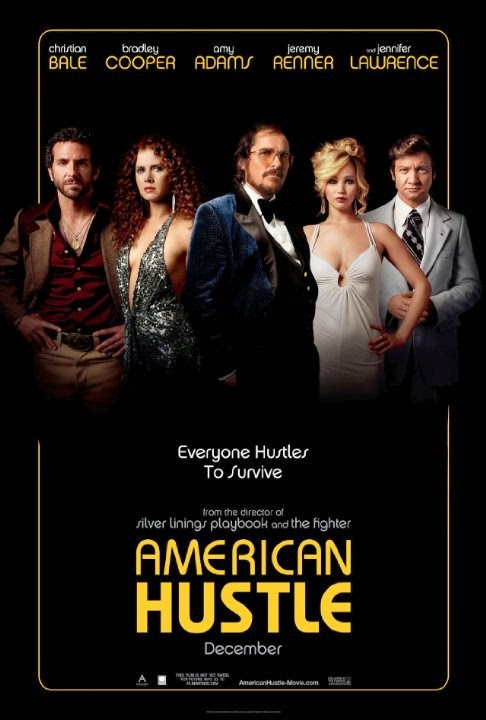
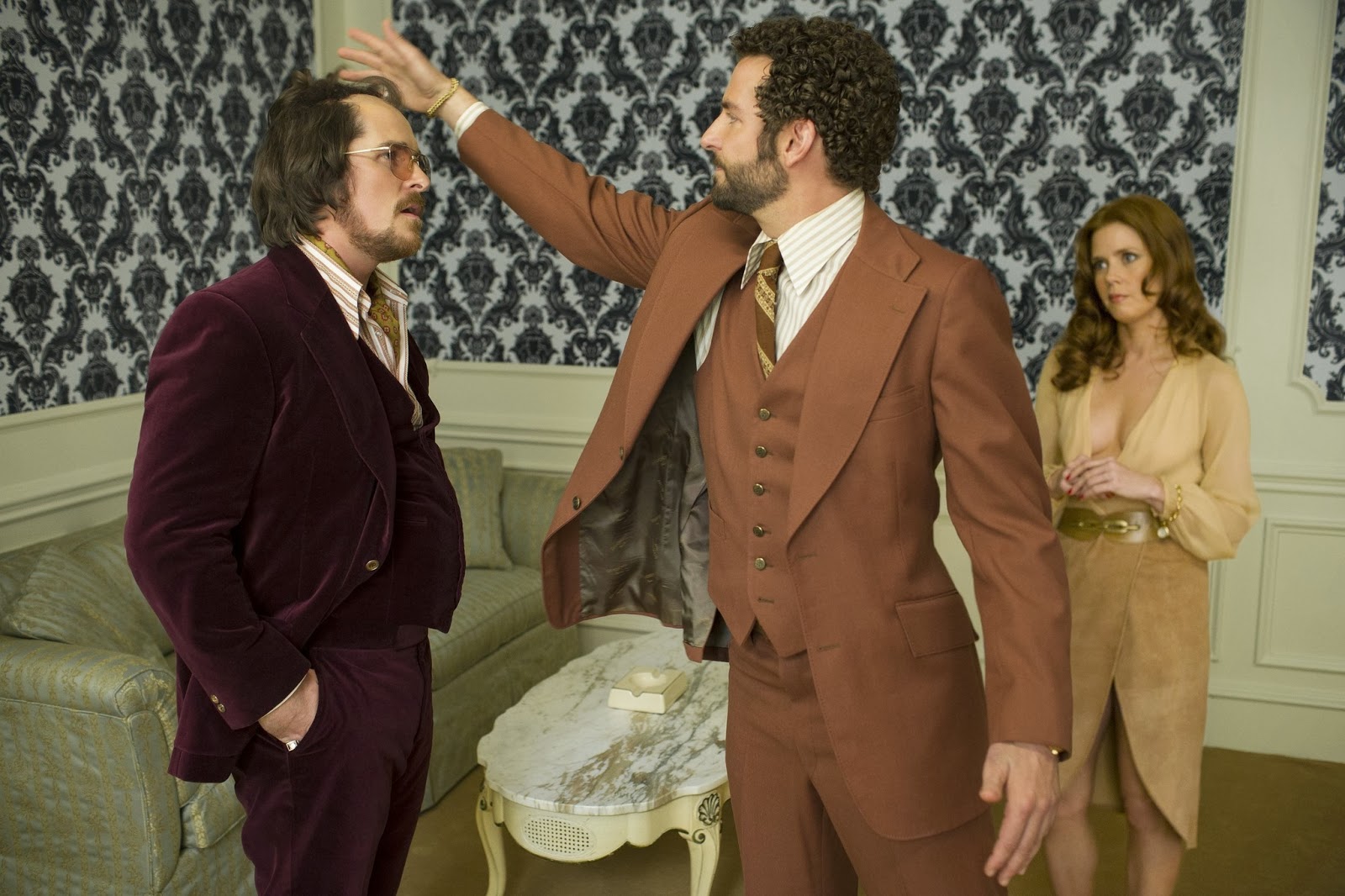
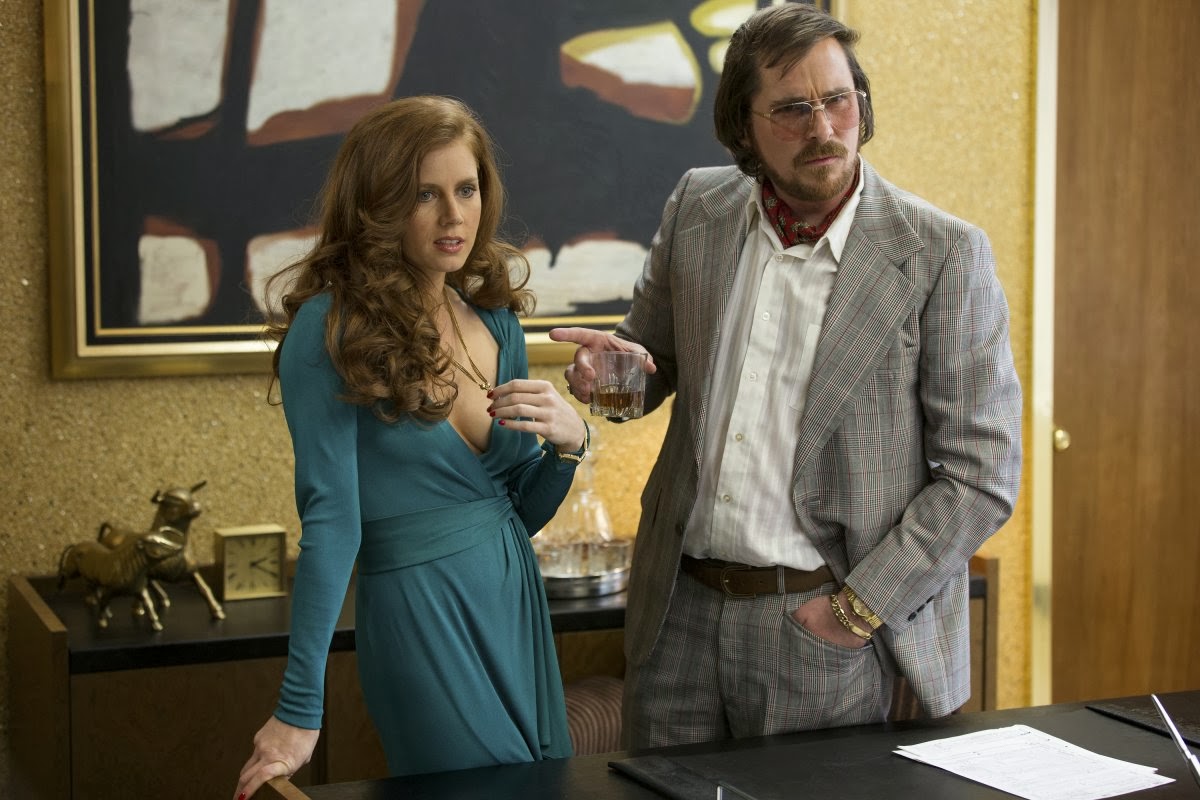
What It\’s About: Irving Rosenfeld (played by Oscar nominee Christian Bale) is a conniving con artist who, with the help of lover/business partner Sydney Prosser (Oscar nominee Amy Adams), bilks hard-luck loan applicants out of non-refundable \”application fees.\” But when they get busted by kinda sleezy FBI agent Richie DiMaso (yet another Oscar nominee Bradley Cooper), they agree to help Richie with a convoluted sting operation that came to be known as Abscam—one involving foreign sheikhs and borrowed money and mafioso and, oh yes, politicians: Lots and lots of them.
And we must not forget to mention Rosalyn Rosenfeld (Jennifer Lawrence, who you\’ll not be surprised to learn is an Oscar nominee), who may not have much to do with the central premise but still helps makes American Hustle the rollicking farce that it is.
Some Thoughts: It\’s not often that I can watch Christian Bale in a movie and think to myself, \”hey, I\’m better looking than he is.\” Sure, we both might\’ve lost some hair and gained some paunch, but I do at least avoid extravagant comb-overs and open, belly-baring Hawaiian shirts.
Perhaps Irving\’s comb-over is emblematic of the movie itself: Almost everyone in it has something to hide.
Irving and Sydney are in the business of hiding. They\’re American hustlers, after all: They must hide their true intentions and businesses and relationships and even identities (with Sydney going especially over-the-top, masquerading as an English noblewoman named \”Lady Edith Greensley\”). Richie hides, too—whether it\’s his identity during a sting operation or the fact that he curls his hair. Ordinary folks masquerade as sheikhs and mafia lawyers. Crooked politicians masquerade as honest statesmen. Rosalyn tries—rather unsuccessfully—to hide her own insecurities and affections and straight-plain craziness.
You could argue (and I think the film does) that Mayor Carmine Polito—one of the prime politicians caught in the sting—is one of American Hustle\’s most honest and honorable characters. Set aside that killer pompadour (I would\’ve loved to have had hair like that back in my preschool, Elvis-loving days), and you\’ve got a guy who really wants to do something good for his community. He figures that, to get something done right in this world of ours, you gotta go a little wrong.
And that sense of moral tension is what, I think, gives this movie some Best Picture bona fides. Historical farces filled with fake sheikhs and science ovens are all well and good, but you need a little heft to make the cut.
It\’s the sort of tension that folks who believe in a moral God and a fallen world struggle with all the time. We\’re all created by a perfect Creator, and so there\’s part of His design in all of us. But the world and everything in it is twisted, which means we all fall short—and we\’re sometimes pulled in unhealthy or immoral directions. There\’s a dichotomy at work in our souls—one Rosalyn nicely alludes to when she talks about perfume.
\”Historically, the best perfumes in the world, they\’re all laced with something nasty and foul,\” she tells Polito\’s wife, Dolly. \”Sweet and sour. Rotten and delicious. … Flowers, but with garbage.\”
And so it is with us. We want to be good, but we kinda gravitate to the bad, as well. We want to do the right thing—but we want to do our own thing, too.
And so that\’s the world we\’ve built for ourselves. There\’s a lot of good in it, but there\’s a lot of garbage, too. And we\’ve got to deal with both sides of that world if we want to get stuff done. Jesus got that, actually. \”I am sending you out like sheep among wolves,\” he told his disciples. \”Therefore be as shrewd as snakes and as innocent as doves.\”
But that\’s different than what most of us do—and what Carmine did—to get by. Most of us, instead of holding the paradox of the serpent and dove in our hand, we compromise. We allow ourselves to be a little bad for some unseen better purpose. And, as both Carmine and Richie discovers, that doesn\’t always work out so well.
There is a certain poetic justice at work here: Liars and schemers are caught through the lies and schemes of others. Justice, in a way, is served. But again, we\’re living in Rosalyn\’s perfume world, both rotten and delicious. We\’re not given a neat little ending, and what justice there is is meted out imperfectly. Happily ever after only happens in heaven and movies—and as this movie suggests, not always in the latter.
Questions:
1. We\’ve talked about how most of the characters here have something to hide. Truth is, though, most of us hide in one way or another. We wear masks in certain situations or slip on a slightly different identity with some people. Do you find yourself \”hiding\” at times? When?
2. Sydney reveals her true, non-English noblewoman identity to both Irving and Richie eventually. Who sees the real you?
3. \”I believe that you should treat people the way that you want to be treated,\” Irving tells Carmine. \”Didn\’t Jesus say that?\” He did—or at least something close to that. It sets the table for Irving\’s betrayal of Carmine, and makes it all the more painful or Irving and the audience. Yes, Carmine was involved in bribing politicians, but the movie encourages us to sympathize with the mayor. Should we feel sorry for him?
4. Is there a hero in American Hustle? Who? Is there a villain? Who?
5. Have you ever done something right for the wrong reasons? Have you ever done something wrong for the right ones?
What the Bible Says:
\”… everyone who wants to live a godly life in Christ Jesus will be persecuted, 13while evildoers and impostors will go from bad to worse, deceiving and being deceived.\”
2 Timothy 3:12-13
\”What you have said in the dark will be heard in the daylight, and what you have whispered in the ear in the inner rooms will be proclaimed from the roofs.\”
Luke 12:3

Discussional: 12 Years a Slave

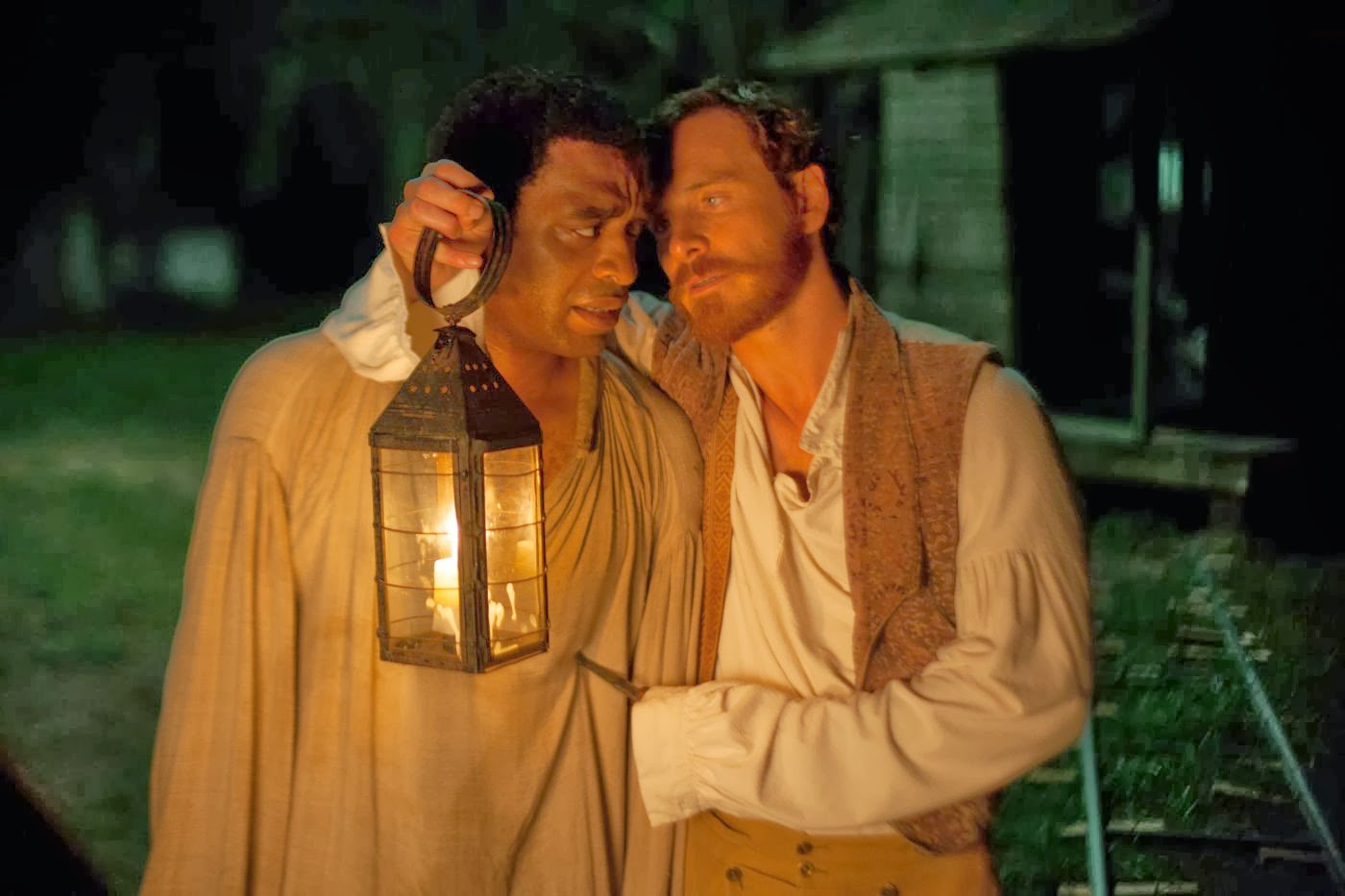
What It\’s About: Solomon Northup (Oscar nominee Chiwetel Eojiofor), a free man living in the pre-Civil War state of New York, is kidnapped, thrown in chains and sent south to be sold into slavery. His first owner, a man named Ford (Benedict Cumberbatch), seems kind enough (as far as slave owners go). But when Solomon attacks his abusive overseer, Ford sells Solomon to the truly monstrous Edwin Epps (nominee Michael Fassbender). He has the power to make life a living hell for the human beings he\’s bought, and he does just that, particularly for the proud and beautiful Patsey (nominee Lupita Nyong\’o), whom he abuses in every imaginable way. It\’s a horrible, dehumanizing life for all involved: To survive, Solomon must hide his identity and education, all the while trying to find some way to return to his wife and children back home.
Some Thoughts: No one, I think, can watch 12 Years and not be impacted, even shocked, by what they see. We know, of course, that slavery\’s an evil institution, but this brings it home. It\’s tempting to shut your eyes and ears to some of what you see here.
And that, in itself, is a telling reaction, since in a way that\’s what our \”good\” slave owner Ford must\’ve done for much of his life. A part of him knows that slavery is a wicked institution. He seems deeply disturbed by it at times, and does what he can to make it more humane. And yet, he accepts the institution\’s inherent awfulness as the cost of doing business, apparently.
I\’ve read a great deal about America\’s founding fathers, most of whom owned slaves. Washington, Jefferson, Madison—all were slave owners uncomfortable with slavery. They saw the horrific irony of the country they were creating—a land built on liberty when its founders without even that essential right. And while some expressed the wish that slavery had never come to America, they didn\’t know how to get rid of it once it was here. For me, the movie helped shine a harsher, more tragic light on these national heroes: And while I believe that the good someone does isn\’t wiped clean by the bad, it\’s an important reminder of the lies we tell ourselves sometimes to excuse the bad—in both ourselves and others.
I was also really struck by how Christianity was used to undergird and often excuse people\’s behavior here. Ford sees faith as a comforting, civilizing agent for his slaves, and he offers a plantation-side message to his bought masses. But there\’s a tragic dissonance at work: Ford preaches about the children of Abraham as a slave woman sobs over her own lost children—mother and kids separated in the sale. Epps uses the Bible as justification for owning slaves and treating them so horribly. He quotes Luke 12:47: \”And that servant, which knew his lord\’s will, and prepared not himself, neither did according to his will, shall be beaten with many stripes.\” \”That\’s Scripture!\” he bellows. And when Epps\’ plantation is struck with drought, Epps calls it a biblical plague: He knows he\’s not being punished for his own sins, and blames it instead on his slaves. \”I bring \’em God\’s word, and heathens they are, they brung me God\’s scorn.\”
But faith is also shown, briefly, as a source of solace, hope and even humanity. Solomon and his fellow slaves sing \”Roll, Jordan, Roll\”—a song that speaks of the hope for a better life to come—together in a powerful moment of solidarity. And undergirding the entire movie is a sense that there is a higher law than the law of the land—one given by God, not man—and that as such, the institution of slavery is a sin.
We hear it from a visitor named Bass (Johnny Depp): \”Laws change. Social systems crumble. Universal truths are constant. It is a fact, it is a plain fact that what is true and right is true and right for all. White and black alike.\”
We hear it from a woman named Mistress Shaw: \”In his own time, the Good Lord will manage them all. The curse of the pharaohs was a poor example of what waits for the plantation class.\”
We hear it from Solomon himself: \”Thou devil!\” he tells Epps. \”Sooner or later, somewhere in the course of eternal justice thou shalt answer for this sin!\”
The message is obvious: Slavery is a sin, abhorred by God Himself. It is a universal truth, far above the powers of mortal man to change. 12 Years a Slave posits there is a morality in the universe misunderstood by the likes of Epps and Ford. And that, however you call it, points right to God.
Questions:
1. Characters in 12 Years a Slave twist religion to serve their own ends. Can you think of times when certain people now have done that? Have you done that?
2. Was Epps a Christian?
3. At one point, Patsey asks Solomon to kill her, claiming that God would look on it not as a sin, but as a mercy. Do you think she\’s right?
4. The song \”Roll, Jordan, Roll\” is perhaps a nod to the comforting power of faith in times of great misery—even when it doesn\’t make that misery disappear. Have you gone through times when your faith comforted you?
Bible Verses
\”But let justice roll down like waters, and righteousness like an ever-flowing stream.\”
Amos 5:24 (a verse that gives \”Roll, Jordan, Roll\” perhaps extra resonance)
\”He has told you, O man, what is good; and what does the Lord require of you but to do justice, and to love kindness, and to walk humbly with your God?\”
Micah 6:8
\”Everyone who makes a practice of sinning also practices lawlessness; sin is lawlessness.\”
1 John 3:4
\”For I consider that the sufferings of this present time are not worth comparing with the glory that is to be revealed to us.\”
Romans 8:18
\”We are afflicted in every way, but not crushed; perplexed, but not driven to despair; persecuted, but not forsaken; struck down, but not destroyed; always carrying in the body the death of Jesus, so that the life of Jesus may also be manifested in our bodies.\”
2 Corinthians 4:8-10

Looking for Truth at the Oscars

Gravity and American Hustleeach snagged 10 Oscar nominations this morning, including for Best Picture. But they\’ll have to contend with seven other nominees for that top honor: 12 Years a Slave, Captain Phillips, Dallas Buyers Club, Her, Nebraska, Philomena, and The Wolf of Wall Street.
Overall, it\’s a strong mix of movies (even with the sad, nay, horrible omission of Saving Mr. Banks) in a year that had more than its fair share of good ones. But that doesn\’t mean they\’re all great to sit back and watch with your sweetie and a bag of popcorn. 12 Years a Slave and its depiction of horrors is, at times, almost torture to sit through. The Wolf of Wall Street is as rough and foul a movie to be released in—well, maybe ever. American Hustle, Dallas Buyers Club, Her and Nebraska are all rated R for good reason, and many Christians won\’t see R-rated movies unless they have the words \”passion\” and \”Christ\” in the title.
There are lots of good reasons to skip harsh movies, of course, whatever their artistic merit. Plugged In (the ministry for which I work) exhorts people to be wary of the entertainment they consume, just like health-conscious folks might clear of trans-fats. Watching a lot of sex and violence and whatnot can be unhealthy, studies suggest. And if that\’s not enough rationale, we can point to Scripture—the oft-quoted Philippians 4:8:
Finally, brothers, whatever is true, whatever is noble, whatever is right, whatever is pure, whatever is lovely, whatever is admirable—if anything is excellent or praiseworthy—think about such things.
But should all of that preclude us from, or make us feel guilty for, watching the movies above? Not necessarily.
Many Christians take Phil. 4:8 to mean that we shouldn\’t expose ourselves to unpleasantness. If a movie contains elements that rub us the wrong way or make us feel uncomfortable or run counter to our faith, we should steer clear. And maybe they\’re right. I\’m no theologian.
But when it comes to the art of storytelling (and movies, of course, are simply powerful visual stories), it seems to me like you often need to bring in some negative elements to bring forth the true, the right, the pure. The Bible itself is certainly no gigantic Hallmark card of inoffensiveness. It challenges us and sometimes shocks us. The people who wrote it lived in a harsh, brutal, sensuous and often unforgiving world. And so when I read Phil. 4:8, my eyes are pulled again and again to the beginning of the phrase.
Whatever is true.
\”God\’s artistic choices should govern our own,\” writes N.D. Wilson in a fantastic online column for Christianity Today. \”More than any other type of artist, Christian artists should be truth-lovers and truth-tellers. More than any other consumer, Christian readers … should be truth-seekers.\”
And so, I think, should Christian movie-watchers.
The movies selected as Best Picture nominees, by and large, hide truth inside their messy folds: artistic truth, emotional truth, spiritual truth. They touch a nerve. Most of them are not made to honor God. And yet, because of the truth embedded in each, they do in spite of themselves.
Over the next several weeks, until the Oscars are announced March 2, I\’m going to periodically post some mini-musings on the Best Picture nominees. I\’m calling them \”discussionals\” (a mixture of devotionals and discussions) because, well, I like to make up words every once in a while. They\’ll be mainly a series of thoughts and questions and even a Bible verse or two—stuff that I found worth mulling over. As such, they\’ll be quite personal, written as much to work through my own thoughts as anything.
I won\’t promise to get through all the nominees. But hopefully, I\’ll get to most of them—in alphabetical order. They\’ll be mostly for folks who\’ve actually seen the films already and, of course, shouldn\’t be taken as a reason to go see them. But I hope they\’ll be of some use.

These Are a Few of My Favorite Films

The Denver Film Critics Society (of which I\’m a member) just unveiled their picks for the best movies/performances of 2013. Next week, Plugged In (which pays my bills) will announce its own picks for the \”best\” films of the year. No surprise that these two \”best of\” lists will look quite different. We Denver Film Critics judge films on artistry and quality, while we Plugged In reviewers are more concerned with a film\’s morality. Sure, American Hustle might be sharp and funny, but it\’s not the sort of thing folks would likely watch in small group.
To this miasma I add yet another list—a \”best of\” list for me. It doesn\’t set aside artistic quality, because I like good movies. It doesn\’t completely set aside my Plugged In hat, since I also like good movies (if you catch my drift). And it also, of course, reflects my own personal taste—how it made me feel. After all, watching movies, and even reviewing them, is an inherently subjective process. What we see and hear is not designed so much as to teach us as to move us—to laughter, to tears, to sheer terror. And what moves us differs greatly from person to person.
So with that said, here are 10 movies (in alphabetical order) that moved me this year.
12 Years a Slave: It\’s one of those movies that everyone should watch, even though you might never want to watch it again. 12 Years—based on the autobiography of Solomon Northup, a free black man who was kidnapped and sent to the pre-Civil War south—lays bare the evil of slavery, showing the scars of its victims and the corruption of its perpetrators. A raging Michael Fassbender is wickedly great as a tyrannical slave owner, using the Bible as justification for how he runs his plantation. Benedict Cumberbatch (who seems like he\’s in everything this year) exposes the lie of the \”good\” slave owner, who despite his best intentions feeds the diabolical system. \”In his own time, the Good Lord will manage them all,\” we hear. \”The curse of the pharaohs was a poor example of what waits for the plantation class.\” A fantastic, hard-to-watch classic.
August: Osage County: Think Grendel had a monstrous mother? The Beowulf creature doesn\’t have anything on Meryl Streep\’s Oklahoma beast, Violet Weston. Besieged by relatives after the suicide of Violet\’s long-suffering husband, Beverly, the drug-addled matriarch seems set on making everyone as miserable as she is—setting up a titanic clash of wills with her daughter, Barbara (Julia Roberts). For Plugged In, I called this an Old Testament story of reaping the whirlwind—a tale in which lives are crushed and no one leaves Osage County without being bruised by the story\’s tornado. This is a dark, sometimes bitter comedy, but the performances—particularly by a gritty, angry Julia Roberts—are uniformly great.
Before Midnight: This is the third of a trio of movies filmed over 18 years—all directed by Richard Linklater and all starring Ethan Hawke and Julie Delpy. The first two chronicled the curious romance of Jesse and Celine: The third finds the couple middle-aged and married now, but not happily so. Before Midnight is a delightful, painful cascade of dialogue showcasing a relationship falling apart. Batting eyelashes are replaced with terse retorts, languid kisses make room for long-held grievances. It\’s the most realistic picture I may have ever seen of an unraveling marriage and the frustrations that plague solid relationships from time to time. This is a movie that shows love—not the infatuation or romance or lust that movies sometimes mistake for love—as a darker, more complex thing, and wonders aloud whether it exists at all. But Before Midnight holds out a candle of possibility—a flicker of truth that Christians know particularly well: Sometimes, love can endure the darkest night. Sometimes it can be reborn.
The Conjuring: Almost every moment of this 2013 frightfest was a cliché. The old house, the possessions, the evil witch, the music boxes, the creepy puppets, the murdered dogs. None of that made The Conjuring any less terrifying. This flick creeped me out more than the two-year-old tomato I found in the back of the refrigerator (though the tomato and the demon Bathsheeba did look surprisingly similar). And if scares weren\’t enough, it was also an in-your-face exhortation to read your Bible—and read it right now before the monsters come. Sometimes, Christian-tinged movies give me nightmares for all the wrong sorts of reasons. But this one was meant to be scary.
Frozen: Oh, Disney, how I\’ve missed you. For almost two decades, the Mouse House has played wallflower to sister studio Pixar—Sue Ellen O\’Hara to Pixar\’s Scarlett. But Frozen may signal that the animation\’s grande dame may be ready for another turn on the dance floor. Sure, maybe this film isn\’t quite Beauty and the Beast. The music is more trendy than timeless, and I still the magic of 2-D animation. But the gags are funny, the story first-rate and the themes are simply wonderful. Back in the day, a Disney princess would need to be saved by a prince—perhaps with a tender kiss. This time \’round, it\’s these princesses themselves that do the lion\’s share of the saving. The result is magical—so magical that this is the only film on the list that I\’ve actually cried during. Twice.  
Gravity: I\’ve written so much on Gravity I\’m loathe to bang out many more words on the subject. You can read what I said about Alfonso Cuarón\’s beautiful epic here or here or here, if you\’d like. So let me just offer one stray, perhaps slightly nonsensical thought—that the universe we see in Gravity may give us a very small glimmer of God, maybe. After all, both are beautiful, terrifying, completely incomprehensible in so many ways. And yet, there\’s a familiar spot of it that we call home. It gives us warmth and sustenance, provides everything that we need in the way that we need it. It feels like it was made for us. And when we, like Ryan, become overwhelmed with how big everything is and how small we are, we focus our attention on that spot of home, and do whatever we can to get back there.   
Philomena: With the help of a caustic journalist, a woman struggles to reunite with her son—a child she was forced to abandon 50 years before. It\’s perhaps the most understated movie on this list: Star Judy Dench does not float through space, nor is she possessed by demons, nor does she sing with any snowmen. But Dench does offer us a measured, moving performance of an old lady who was woefully misused by her church but still loves her God all the same—and in keeping with His wishes, shows the capacity to forgive.
Saving Mr. Banks: It\’s a clash of storytelling titans—P.L. Travers, the caustic creator of the beloved Mary Poppins, and Walt Disney, the animation impresario who wants to bring Poppins into his own fold. This gloriously acted period piece delves deeply into the redemptive power of storytelling: How we can, through the alchemy of language, twist what was or is into what should\’ve been or could be. For me, the film had a whiff of the great Christian wit G.K. Chesterton, who often talked about the power of story. Some critics have noted that Saving Mr. Banks twists its own facts: Travers detested Disney\’s Mary Poppins and certainly would\’ve hated this retelling of how it came to be. Which makes this movie, I suppose, a meta-narrative of itself.
The Secret Life of Walter Mitty: I don\’t know how much this charming Ben Stiller movie had to do with James Thurber\’s original short story. I don\’t know what so many critics have against this film (hovering right now at 50% on rottentomatoes.com). All I know is that, when I left the theater, I was practically ready to ask my son if he\’d want company on a cross-country roadtrip to Brooklyn. Granted, Walter Mittydoesn\’t have anything to do with Brooklyn (though it is set at the old Life magazine, based in New York). But it does have everything to do with shedding our fears and worries to embrace life at its fullest and most frightening—a timely message always, but especially timely today when so many of us can fall into our own virtual lives.
The Way Way Back: Almost everyone has forgotten about this summer sleeper. But I couldn\’t. The Way Way Back, about a 14-year-old boy (Duncan) with a life-changing summer job, is a funny, poignant coming-of-age story that shows what a family should look like–and it sometimes doesn\’t bear much resemblance to the folks raising you. Steve Carell is fantastically caddish as Duncan\’s overbearing would-be stepfather. Sam Rockwell makes a great bad boss. And Liam James plays Duncan with just the right amount of awkward insecurity. The Way Way Back shows what a world of difference that a little bit of love and confidence can do for you.

Thor: We\’re All a Little Loki

Thor: The Dark Worldrolled into American theaters this Friday, and it’s pretty much exactly what we’ve come to expect from Marvel superhero movies: big, fun and a little silly. One does not expect a lot of complexity from a film whose main character wins arguments with, quite literally, a big hammer. Nor would one expect to find much Christian faith in a film whose heroes and villains were plucked straight from Norse pagan mythology.
And yet, when we look at the story of Marvel’s odd-couple brothers, Thor and Loki, I’m reminded of a couple of other brothers who had their own problems.
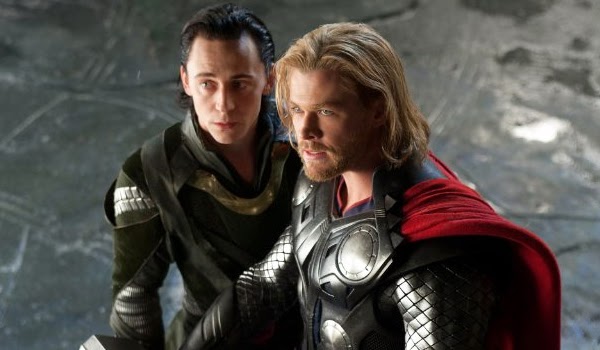
Thor, of course, is our hero: Played by Chris Hemsworth, he’s big and blond and ever-so-heroic. Loki (the scene-stealing Tom Hiddleston) is Thor’s opposite in almost every possible way. Thor’s strong and straightforward, Loki’s smart and sneaky. Thor looks like—well, a god; Loki looks more like an English teacher. Loki is oil to Thor’s water, moon to Thor’s sun, Nicki Minaj to Thor’s Mariah Carey.
It’s hard to imagine two brothers more different, really. But then again, they’re not really brothers.
We learn in the first Thormovie that Loki is actually a frost giant, rescued as a baby from certain death by Thor’s father, Odin, and raised as his own. And when Loki realizes that he’s been adopted, it changes everything for him: He feels like an outsider—separated from the family and Odin’s love (even though in truth he and mother Frigga love him a great deal). From that point on, Loki breaks bad and, for two movies, causes no end of mischief.
If you stripped away the armor and magic, this picture of familial strife would fit comfortably in the Bible, the pages of which are full of quarrelsome siblings: Jacob, who stole the birthright and blessing of his brother, Esau. Joseph, who was sold into slavery by his brothers. And then, of course, you have the first brothers ever—Cain and Abel.
Cain and Abel, like Thor and Loki, both sought their Father’s love. They offered God gifts, hoping to win His favor. The Bible, we’re told, “looked with favor on Abel and his offering,” apparently because Abel gave God the best of what he had. That made Cain very angry, which triggered this response from God Himself.
“Why are you angry?” God said. “Why is your face downcast? If you do what is right, will you not be accepted? But if you do not do what is right, sin is crouching at your door; it desires to have you, but you must master it.”
Most of us know what happened, though. Sin did master Cain, and he killed his brother.
It seems to me that Loki and Cain have a lot in common. Both felt as though their respective fathers (both heavenly fathers, in a manner of speaking) didn’t love them. Not as much as their blessed brothers, anyway. Both grew jealous and bitter. And when Loki’s anger began to fester, God’s words could’ve been spoken to him, too.
Sin is crouching at your door; it desires to have you, but you must master it.
Both were eventually cast out, as it were. And yet, they are still loved—and still family, in a way. Cain is punished, but God marks him, too, ensuring his survival. And while Loki falls out of Odin’s good graces, he’s offered many opportunities to return to the Asgardian fold.
Loki is both villain and tragic character in the Thor movies. In both films, we see his anger and pain, and we, like Thor, sense the goodness still hiding inside him. Sometimes it comes out: In Thor: The Dark World, Thor and Loki join forces for a time, and Loki earns a measure of redemption. And yet he can’t fully accept the grace held out to him. In movie after movie, Thor has asked Loki to reject his evil ways—to return to the loving arms of his family. But Loki can’t and won’t. His seat at the table is still there, but he refuses to take it.
Perhaps he’s so convinced that he is the frost troll of his birth—that he is, at his core, bad—he can no longer believe that he can be good. He sees what he is, not what he could be.
For all of Thor’s heroic traits, Loki is a far more compelling character for most of us. And I think that might be because we understand his struggle. Like Loki, we’re all fallen creatures—broken and misshapen and not at all what God would like us to be. It’s not all our fault, of course: Sin and brokenness are inescapable in this fallen world. God understands that, and He holds His hand out to us, anyway. All we need do is call Him father, and we become his sons and daughters. He offers us grace and forgiveness for whatever we might’ve done.
And yet, it still can be hard to accept that hand. Often we reject it for all the same reasons that Loki does: Our pride gets in our way. Our anger makes it impossible to reach out to Him. And sometimes, we can convince ourselves that we are unforgiveable—too horrible to ever really be a part of God’s family.
Some theologians might say that we’re all descended from Cain: We have Abel’s blood on our hands. When I realize how stubborn I can be—how petty and bitter and how resistant I am to anyone who might try to help me—the analogy feels frighteningly right.
I see a lot of Loki in me—more Loki than Thor, that’s for sure. I’m a disappointment in so many ways. And I pray that I always have the sense to hold onto God’s hand in spite of it.

The Exorcist and Frightening Faith

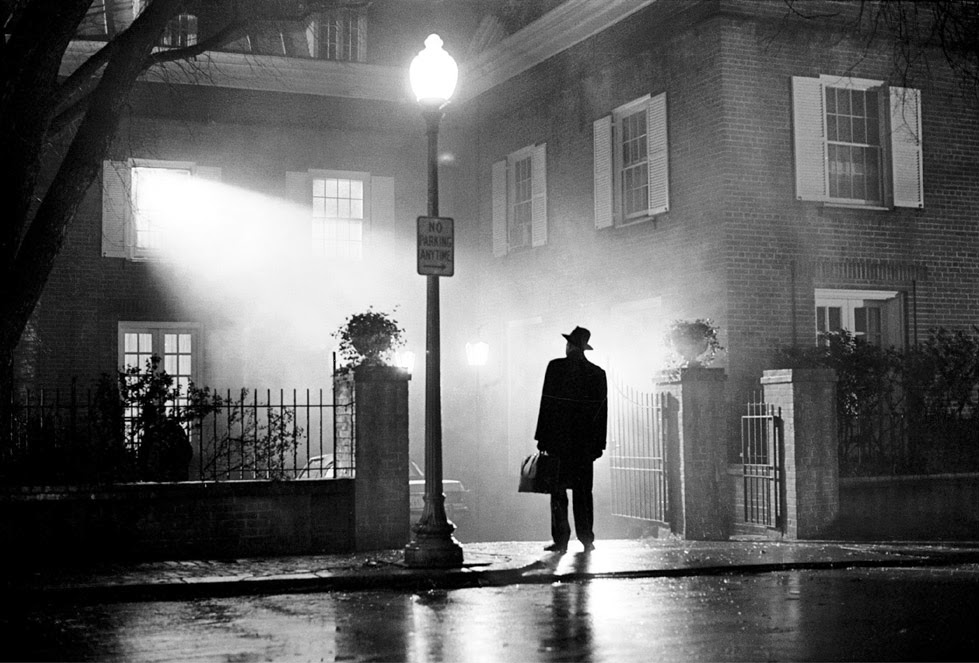
In honor of its 40th anniversary, The Exorcist was recently re-released on Blu-ray, complete with a director\’s cut and a special little book that has who-knows-what sorts of horrors in it. Grace Hill Media—an organization that helps market largely secular movies to Christian audiences—sent me a copy. It\’s sitting at home now, and I honestly don\’t know when—or if—I\’ll be able to watch it.
See, The Exorcist is the scariest movie I\’ve ever/never seen.
When I was about 16 or 17, I \”watched\” the film with my best friend. He and I would often watch horror flicks together, and the moment felt right (to my friend, at least) for us to watch of the most horrific, notorious flicks of all time. We popped in the tape at about 2 a.m. and, about 20 minutes into it, I decided the story of Regan\’s diabolical bodymate was going to be waaay too intense for me. I feigned sleep for the rest of the flick.
But it proved to be impossible to sleep—what with the sounds of retching and cursing and my friend saying, \”Dude! Did you see that?!\”
\”I\’m asleep!\” I kept saying. But I kept peeking, too. And while I didn\’t see all of The Exorcist, I saw enough to know that the other horror flicks I\’d seen before were mere child\’s play. And I\’ve never quite had the courage (even though I review horror flicks all the time) to re-screen it.
Some may wonder why Grace Hill was involved in marketing The Exorcist—an R-rated movie about a possessed, profane, upchucking pre-adolescent—in the first place. It\’s not the sort of film that most Christian audiences gravitate toward.
And yet, the film—as scary and as profane and as disturbing as it is—has some deeply faithful elements.
The Exorcist book, published in 1971, was based on the real-life exorcism of Roland Doe in 1949, and the book\’s author William Peter Blatty is a committed Catholic. In 2011, he wrote (for Fox News) that the book wasn\’t even supposed to be all that scary. He writes:

That I am regularly hauled out of my burrow every Halloween like some furless and demonic “Punxsatawney Phil” always brings a rueful smile of bemusement to my lips as I lower my gaze and shake my head, for the humiliating God’s-honest truth of the matter is that while I was working on \”The Exorcist,\” what I thought I was writing was a novel of faith in the popular dress of a thrilling and suspenseful detective story – in other words, a sermon that no one could possibly sleep through — and to this day I haven’t the faintest recollection of any intention to frighten the reader, which many will take, I suppose, as an admission of failure on an almost stupefying, scale.

The Exorcist (like this year\’s The Conjuring) isn\’t just a goosebump generator: It\’s a film that insists to its skeptical audience that good and evil are real and tangible. That there is both a God and a devil. That there are powers beyond our comprehension, just as the Apostle Paul told us. \”For our struggle is not against flesh and blood,\” he writes to the Ephesians, \”but against the rulers, against the authorities, against the powers of this dark world and against the spiritual forces of evil in the heavenly realms.\”
These things are not often dealt with in your average romcom or Oscar-bait dramedy. Of the typical movie genre, only horror allows such an in-your-face examination of these sorts of themes and almost begs for spiritual soul-searching.
In a 2005 interview with Christianity Today, Scott Derrickson (director for the well-regarded The Exorcism of Emily Rose) said this:

To me, the horror genre is the genre of non-denial. It\’s about admitting that there is evil in the world, and recognizing that there is evil within us, and that we\’re not in control, and that the things that we are afraid of must be confronted in order for us to relinquish that fear. And I think that the horror genre serves a great purpose in bolstering our understanding of what is evil and therefore better defining what is good. And of course I\’m talking about, really, the potential of the horror genre, because there are a lot of horror films that don\’t do these things. It is a genre that\’s full of exploitation, but the better films in the genre certainly accomplish, I think, very noble things.

But many Christians, particularly in Evangelical circles, don\’t see horror as redemptive at all. In fact, many believe it\’s a bit of a black hole—leading viewers toward dark and demonic themes. And while Derrickson admits that a little bit of balance is in order, he\’s a little bit surprised that Christians don\’t cotton to horror more.
\”To me, this genre deals more overtly with the supernatural than any other genre, it tackles issues of good and evil more than any other genre, it distinguishes and articulates the essence of good and evil better than any other genre, and my feeling is that a lot of Christians are wary of this genre simply because it\’s unpleasant. The genre is not about making you feel good, it is about making you face your fears. And in my experience, that\’s something that a lot of Christians don\’t want to do.\”
Let me be honest: I agree more with Derrickson than some. And honestly, I like a good scare now and then. I\’m not nearly as apt to watch horror as I was in my younger days, but I still appreciate a well-crafted, creepy movie. I might even watch one tonight while handing out candy.

But The Exorcist? Sorry. Not tonight. There are some fears I\’m not quite ready to face.